



Two Weeks in Quetico - A Great Introduction (2025)
by Explor8ion
Our destination is a place I’ve wondered about for years but have never visited for some reason – Quetico Provincial Park.
Why Quetico?
So why Quetico instead of my usual spots such as the Churchill River, Atikaki or Woodland Caribou Provincial Park? In a word, WILDFIRE. Once again the words ruling the airwaves and news articles coming out of northern Saskatchewan, Manitoba and Ontario were the dreaded, Dry, Windy, Fires, Hot. Soon to be followed by even more dreaded words such as, Evacuation, Closed, Bans, Destruction.
Somehow, over the past 30 years of canoe tripping I have never gone into the very heart of Canadian Canoeing – I simply thought it was too far away for me, despite the drive being very similar in time to one we’ve done many times all the way to WCPP’s remote entry points. My younger brother did a 5 day trip to Quetico in 2024 and after quizzing him for details I realized that I was sick of traveling burnt landscapes and craving a trip that would remind me of the “good old days” in Woodland Caribou.
Using my trusty tools such as a Crismar map, PaddlePlanner and online forums as well as beta from my brother, I planned a 200km route through some of the more popular areas of Quetico out of Stanton Bay. Since this was somehow my first time to Quetico, I couldn’t go wrong with pretty much any route.
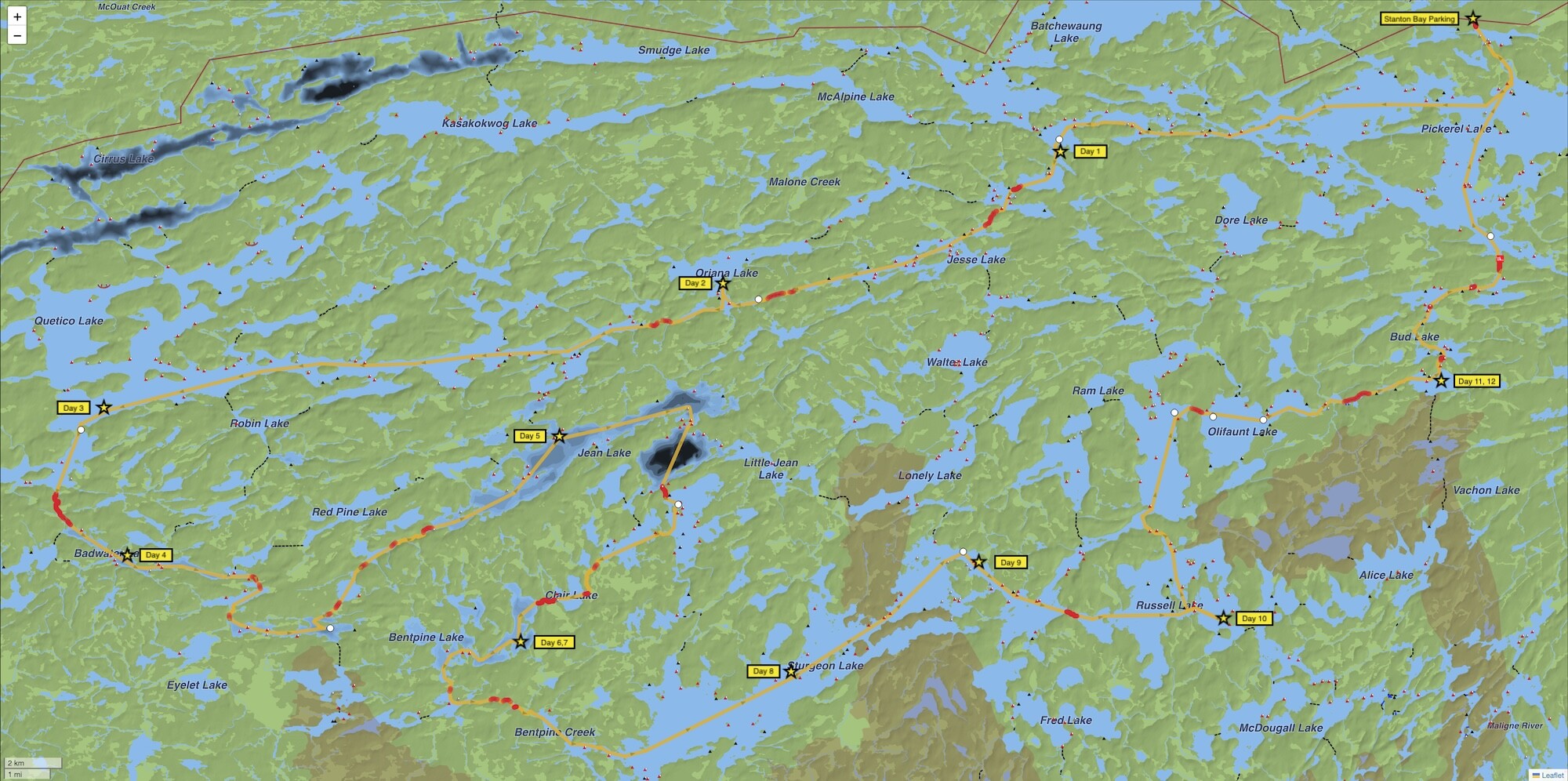
My planned 200km loop would take us south out of Stanton Bay and then west through the huge Pickerel Lake. From there we’d go through Maria, Jesse and Oriana into the mythical “Quetico” Lake. After the infamous 1440 meter “Badwater Portage” we would travel through Badwater, Fair, Your and Boulder Lakes into the giant Jean Lake.
From Jean we planned to tackle Burntside, Claire and Bentpine Lake before exiting Bentpine Creek into yet another huge body of Quetico water – this time Sturgeon Lake (and yes – there are reportedly Sturgeon in here). From Sturgeon Lake we would spend a day in Russell – checking out the Chatterton Falls before heading back to Pickerel Lake via the Pickerel River through Olifaunt, Fern, Bud, Beg and Bisk Lakes. It wasn’t an overly aggressive plan for a 14-day trip but it wasn’t exactly a “sit around and relax” trip either.
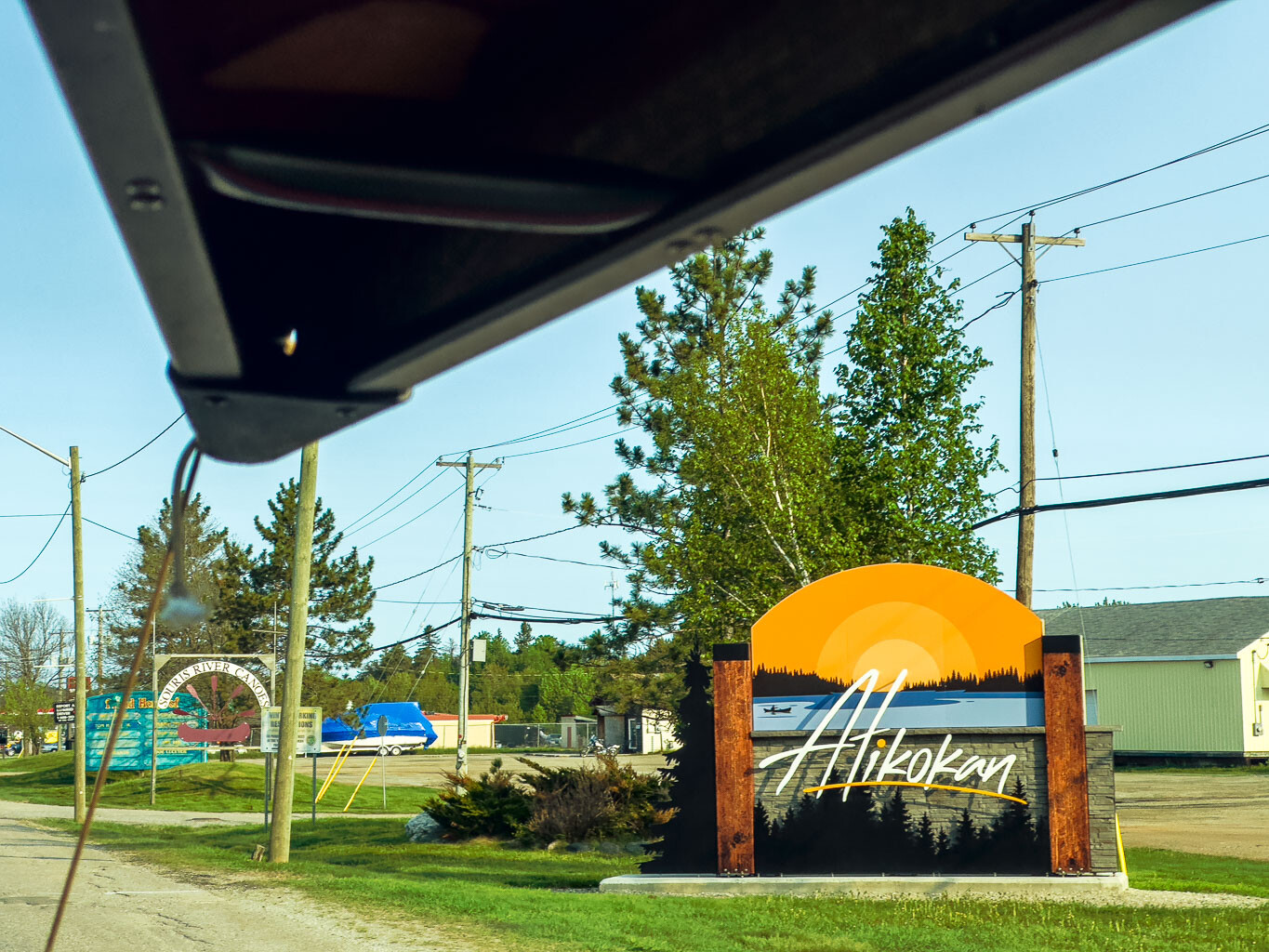
The Town of Atikokan
After a brief overnight stay in the hamlet of Caronport, SK on Thursday night, we continued the long drive to the small town of Atikokan in northwestern Ontario.
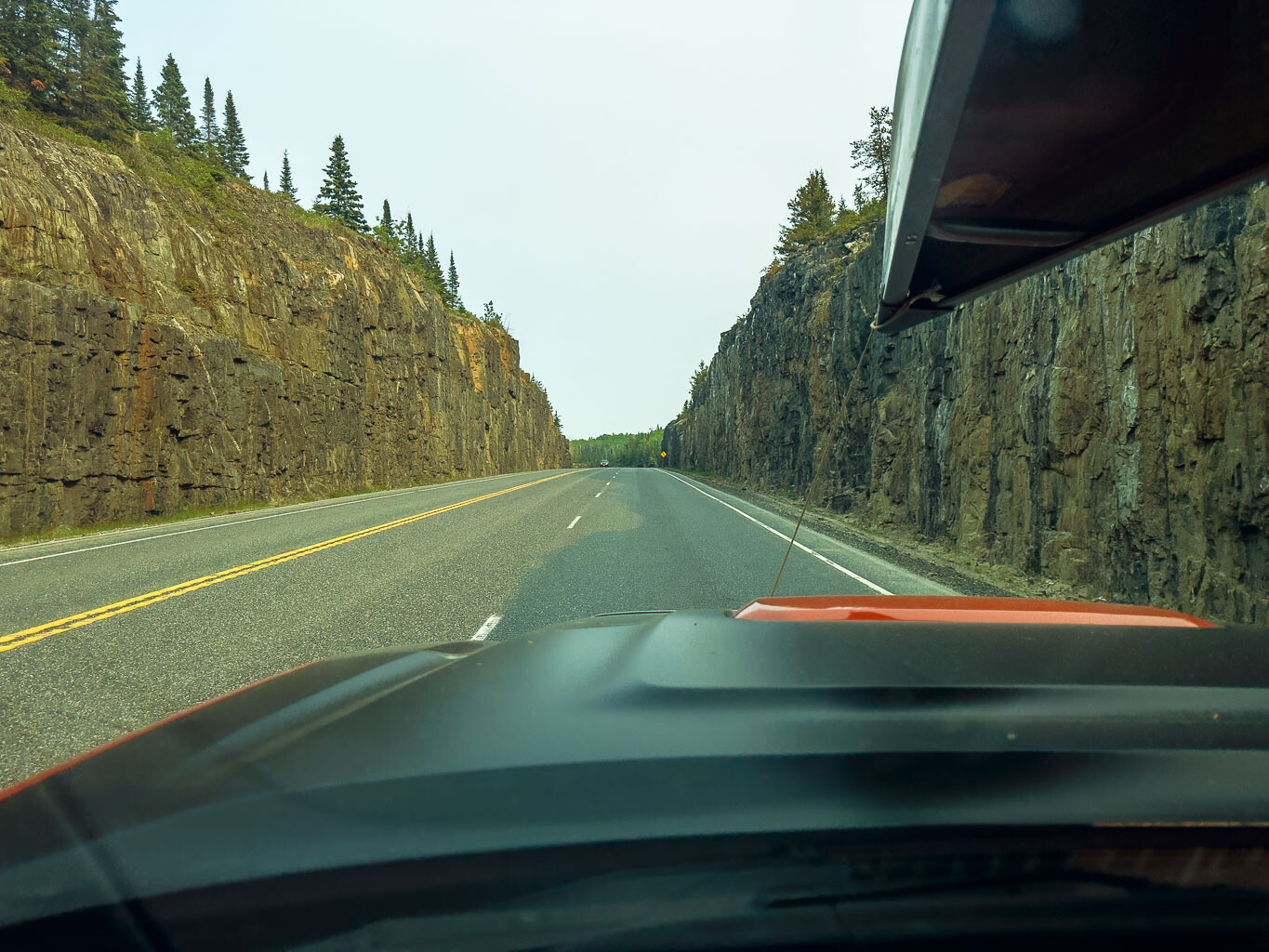
Located about 220 km west of Thunder Bay, Atikokan sits along the Atikokan River in the heart of Ontario’s wilderness. The town was established in 1900 as a divisional point on the Canadian Northern Railway. The name “Atikokan” comes from the Ojibwa word for “caribou bone,”. Atikokan’s population is around 2,800 people. Historically, the town boomed in the 1950s with iron ore mining at Steep Rock Lake. This massive project drained the lake to access ore beneath it — a feat that was once considered the largest inland engineering project in the world.
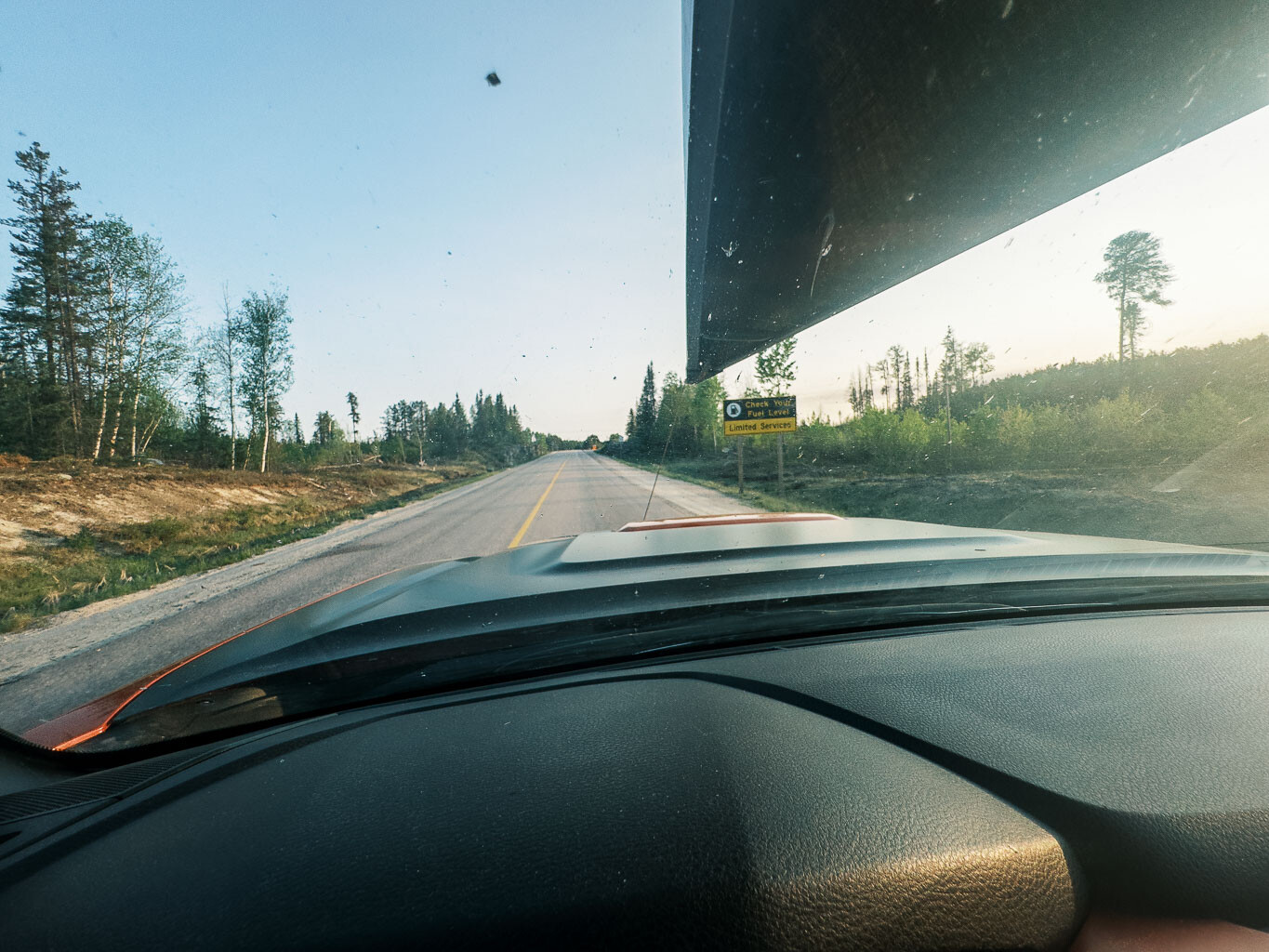
Today, Atikokan’s economy is diverse. The Atikokan Generating Station, converted from coal to a biomass plant in 2014, is North America’s largest of its kind. The forestry sector remains strong, and the town is also a hub for healthcare, education, and retail. Atikokan is a gateway to Quetico Provincial Park, and as such, it is the perfect place to spend an evening or two before your canoe trip. We stayed at the White Otter Inn, only steps from the ranger office where we had to complete our registration in-person the following morning.
Registration Process
Unlike what I’m used to in more remote parks such as Atikaki and Woodland Caribou, before heading into Quetico Provincial Park, all backcountry paddlers need to register in person. Here’s how it works:
- You’ll start at one of the park’s ranger stations or entry points — like Atikokan, Beaverhouse, Cache Bay, or Prairie Portage.
- When you arrive, park staff will check your permit (that can and should be done ahead of time, online), confirm your route, and go over park rules. They’ll also review important safety info, like fire bans, wildlife precautions, and Leave No Trace guidelines.
It all doesn’t take that long, but the office in Atikokan didn’t open before 08:15 meaning we would be paddling the huge Pickerel Lake much later than I preferred. (The obvious solution to this would be to arrive and register the day before – something our itinerary didn’t allow.) We arrived early and chatted briefly with a group of 4 Americans before the doors to the ranger office were unlocked.
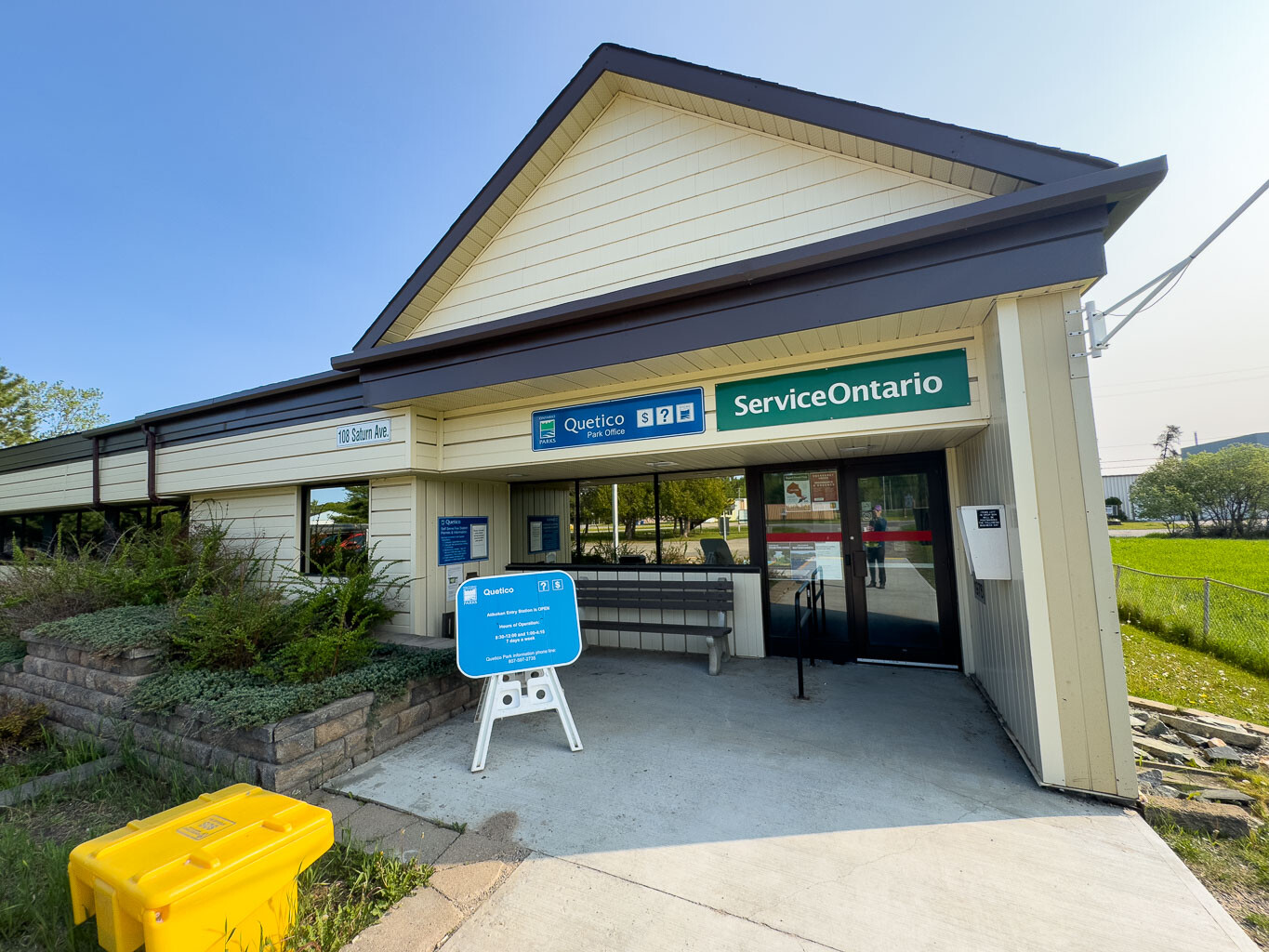
Once a friendly Tina was done confirming and finalizing our registration we got a waterproof permit to carry with us – another requirement which we did get asked to produce by a ranger while on our trip, so make sure you take this with you and know where it is when asked. And then… we were off!
The Adventure
My brother had warned me beforehand not to follow Google Maps’ directions to acquire the Stanton Bay parking lot and that was indeed, very good advice! Google would have you turn off too early after leaving Atikokan on hwy 11. Do NOT turn down Ruff Road, continue driving to the obvious (in hindsight), Stanton Bay Road and then turn south.
We followed a gravel road for approximately 12.5km before we came to an intersection with a large “Quetico” sign. The problem is that the sign is right between the two options – so I was left wondering whether to go left or right! I spotted a small “Ontario Parks” sign in the ditch on the left hand option and decided to follow it another 2.5km to the correct parking lot. All very obvious once you’ve done it, but newbies see things differently.
The parking lot only had a few vehicles – only Canadians are allowed to park overnight at the Stanton Bay lot. Excitement was building as we unpacked the truck and prepared for the first and only portage of the day, a 474 meter carry down to Pickerel Lake.
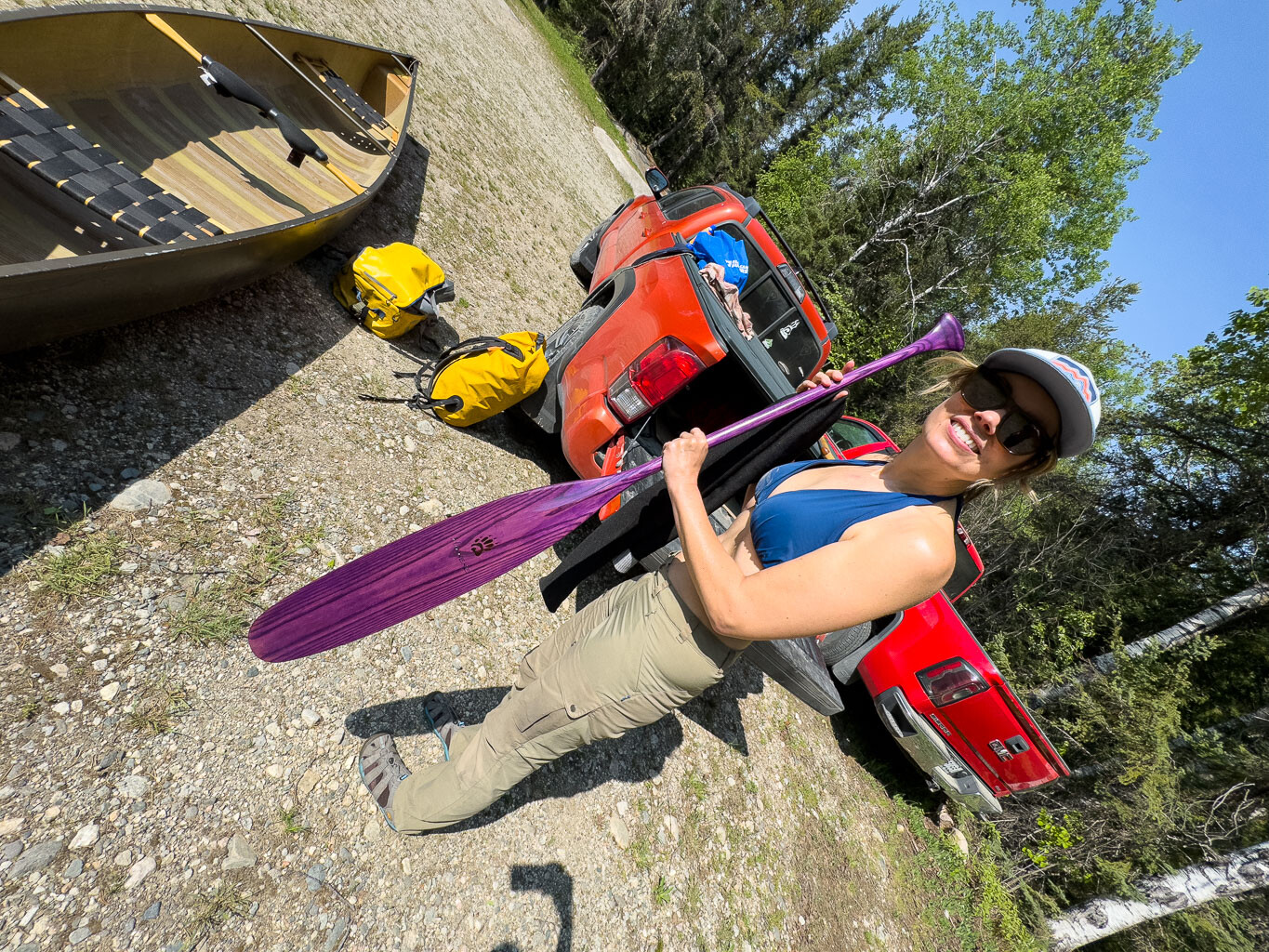
The mosquitoes were out in full force in the warm, humid air as Hanneke discovered one of her birthday gifts I’d managed to sneak along. I bought her a custom paddle from Badger Paddles, a gorgeous, light paddle made out of ash and painted purple with her name carved under the logo.
Saturday, May 31 2025 – Stanton Bay to Mosquito Point (20km, 1 portage)
After unloading the gear and parking the truck in the shade, we shouldered our first loads and started down the portage trail. Hanneke and I both love walking and hiking and we don’t mind doing 2 carry portaging. This means we walk every portage a total of 3 times, but it also means we get to enjoy 1 walk with no gear and when we’re carrying gear it’s obviously much lighter and more manageable than folks who do single carries. Two carries is also safer than one, with less chance of slips, falls, sprains and whatever else can easily happen with heavy, bulky loads of gear.
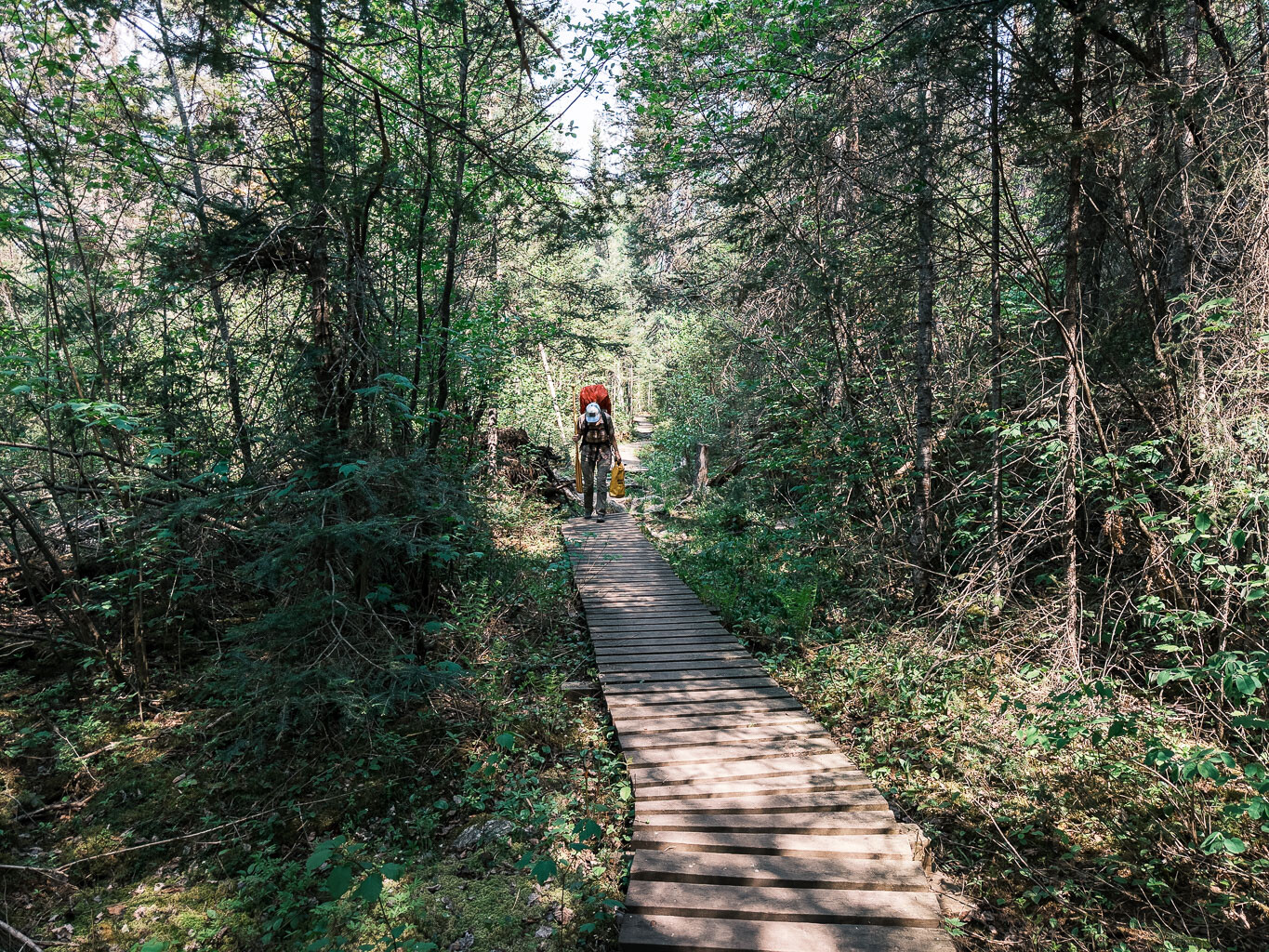
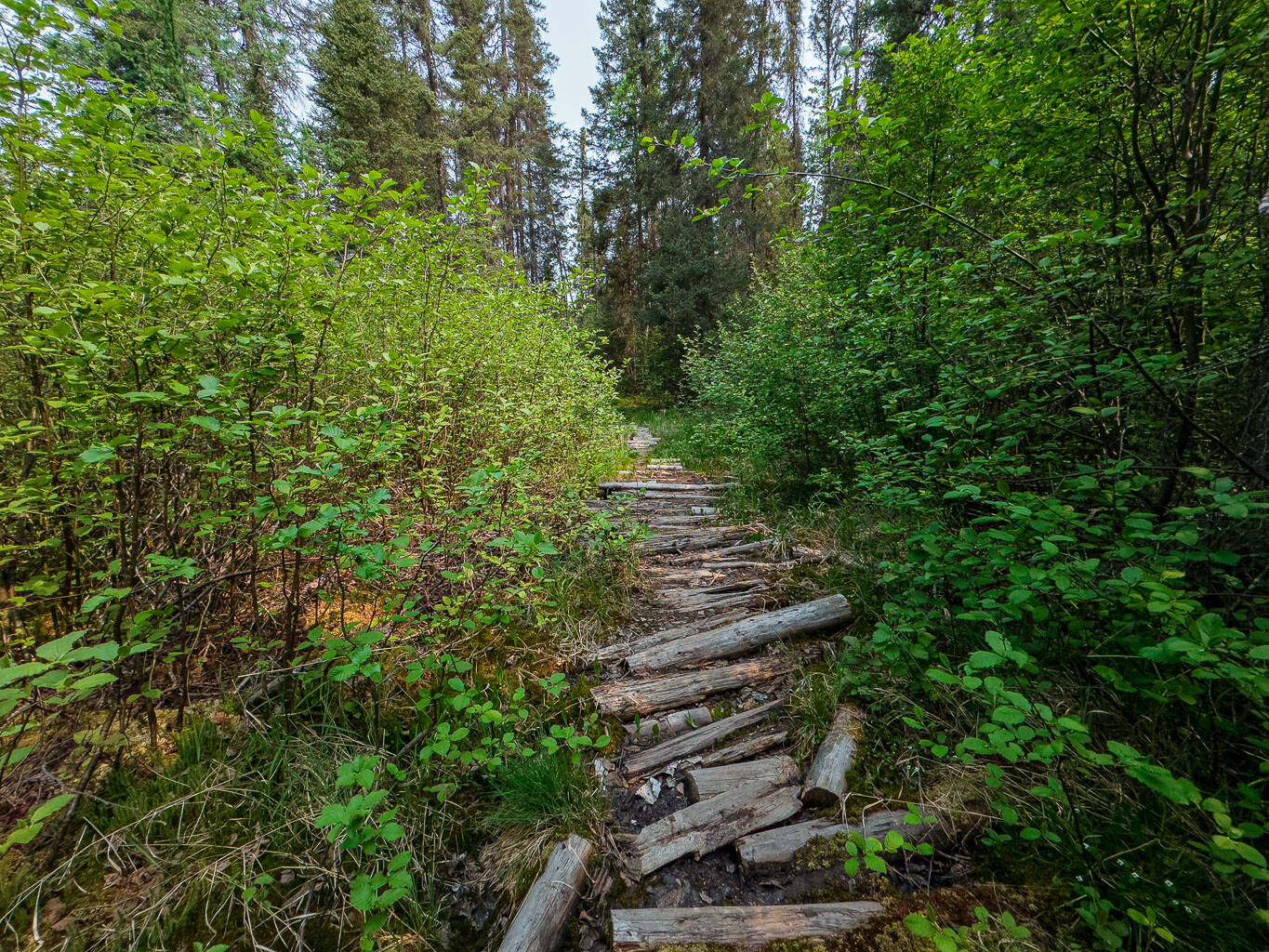
The mossies were fierce once we entered the bush and soon we were regretting not putting on our bug shirts. It’s been a while since we experienced mosquitoes like we did on this trip but on the flip side there were almost no flies and no ticks. Since the portage was almost all downhill it felt pretty easy. There were even long sections of boardwalk – something I told Hann not to expect on subsequent carries! When we first spotted Stanton Bay it was calm Page 12 and beautiful under a blue sky. There is nothing quite like starting a canoe trip on a huge body of water with absolutely perfect conditions like we had. Despite my concerns with a late start (it was now 10:00), it was all going to work out just perfect.
We loaded up the boat with both the gear and ourselves and just like that, we were paddling Quetico for the very first time.
Something I didn’t fully comprehend while planning the trip was just how large some of the lakes we would be paddling were. When looking at a zoomed out map on paddleplanner, it’s very easy to miss the immensity of the terrain. Our first day was 20 kilometers of paddling, all on the same bloody lake. With big water paddling, the wind forecast makes a much bigger impact than precipitation does, direction being most important followed by strength. This was going to be the first canoe trip that I’d be relying on my iPhone 15 Pro to communicate with a web service at BoltWX for weather updates and I was interested in how that process would go.
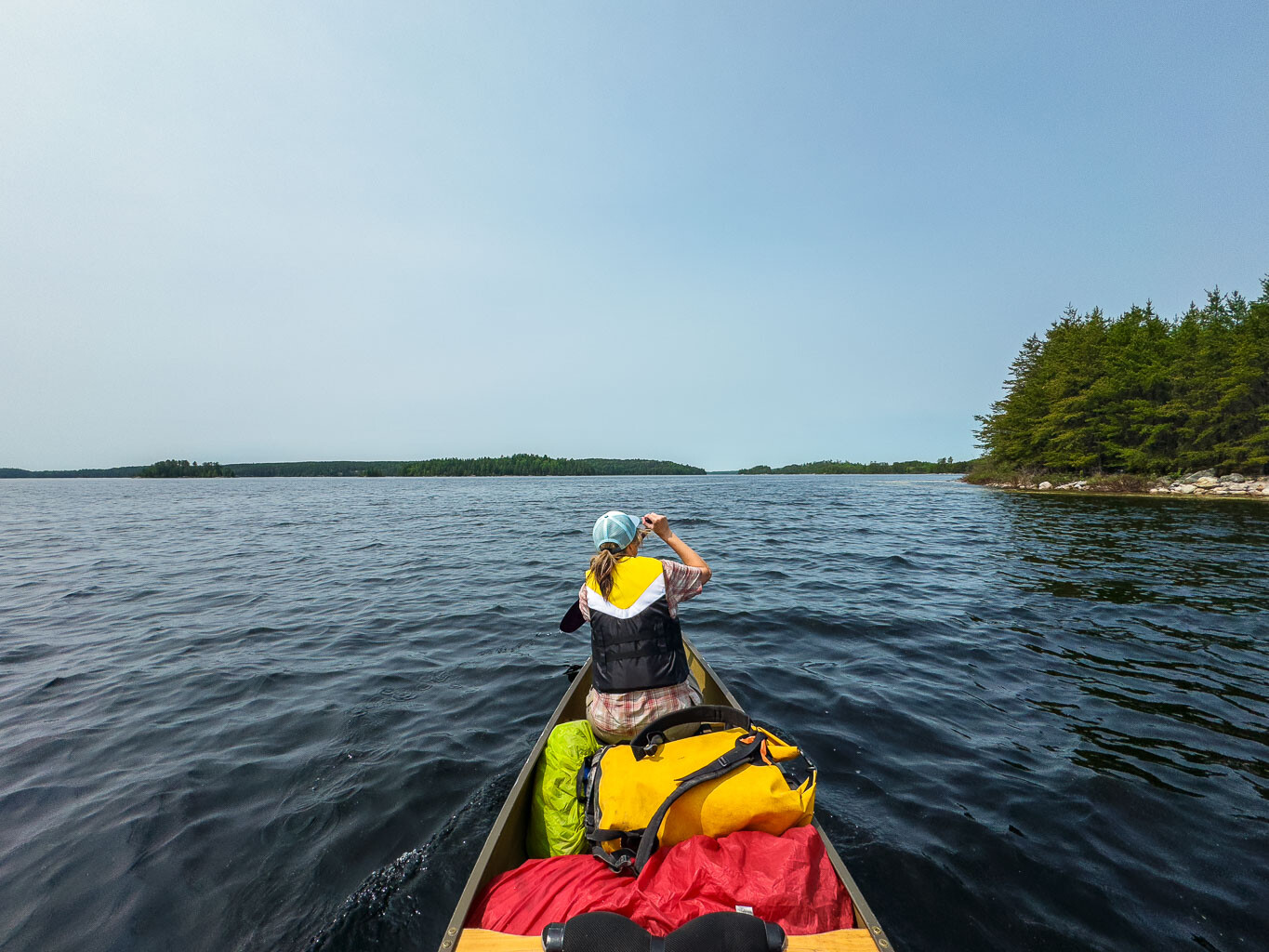
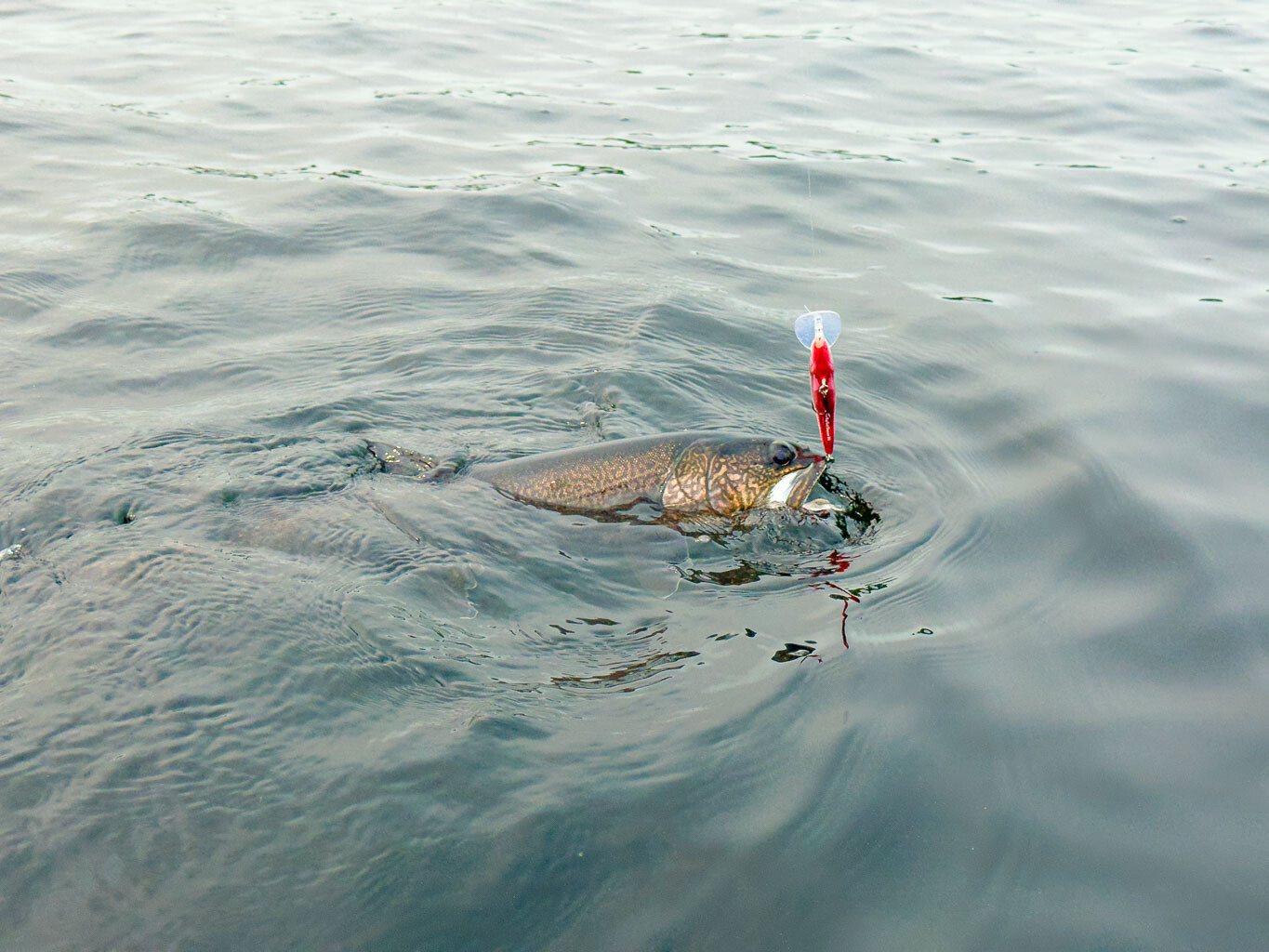
After exiting Stanton Bay we continued paddling on a smooth lake, heading west for the Pickerel Narrows. Of course we threw out some lures for a quick troll and before long we were already onto some feisty lake trout. Surprisingly my deep water Rapala caught more fish than Hann’s Len Thompson spoon – I expected the trout to be shallower than they were.
Recently, hot temperatures must have done their work with the water column already. I continued to marvel over and over at the green, lush landscape all around. Other than a few isolated areas, my last decade of canoe trips has been through way too many charred forests. With a blue sky above, deep clear water below and green forests clinging to some of the planet’s oldest rocks on either side of us, this was pure canoe tripping magic already in the first hours of the first day!
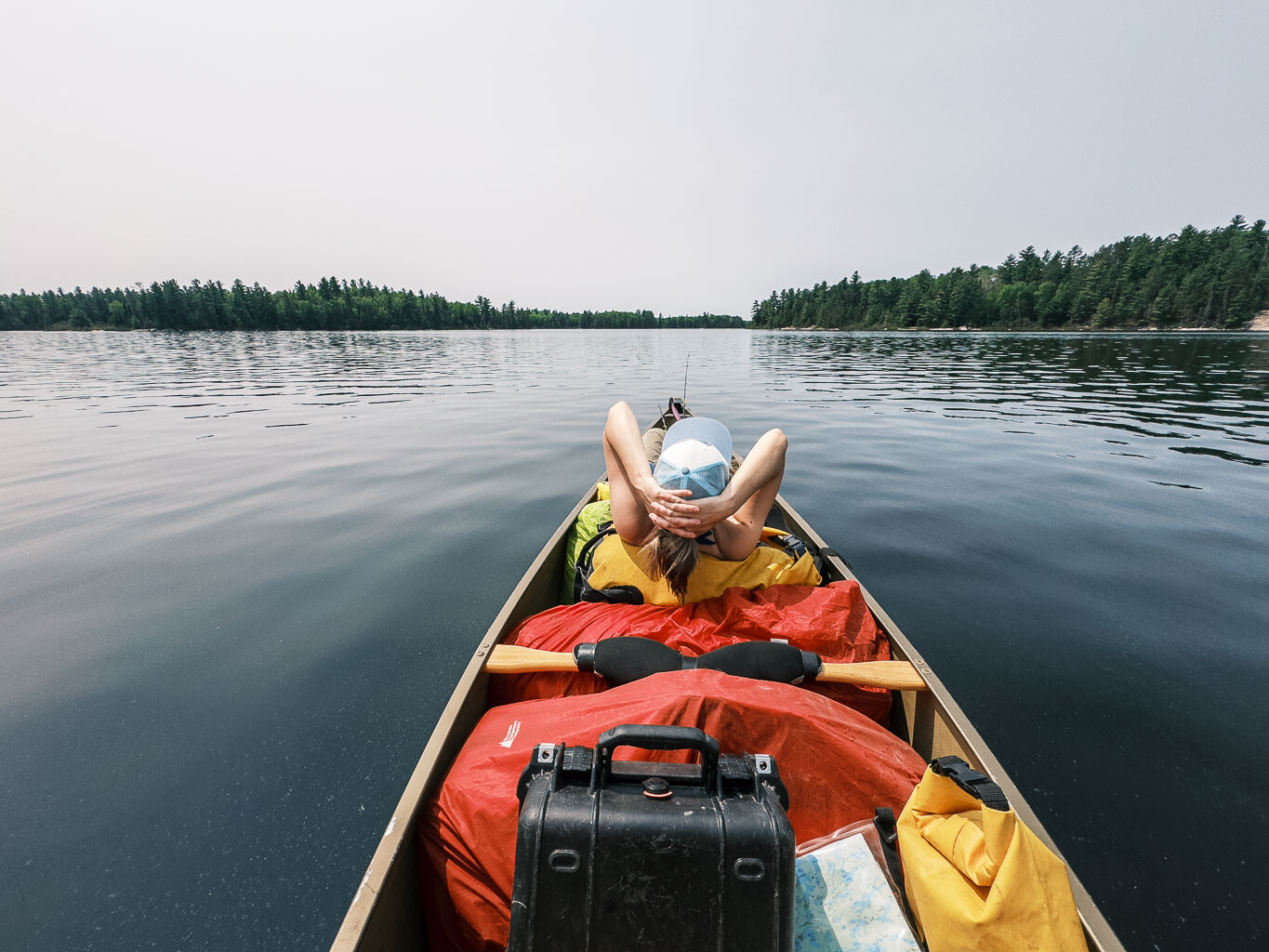
I wasn’t sure how busy Quetico would be at this time of year. We were hoping to score a 4-star site at Mosquito Point where Pickerel Lake turns down towards Maria but I had visions of dozens of other parties wanting the same site.
Nope. It turns out that late May, early June is a great time to visit Quetico. We only met 4 or 5 other groups the entire trip – certainly not a busy place when we were there. After catching 6 Page 16 0r 7 nice sized trout and paddling for several hours we were delighted to see an empty site at Mosquito Point and docked our boat at around 16:00.
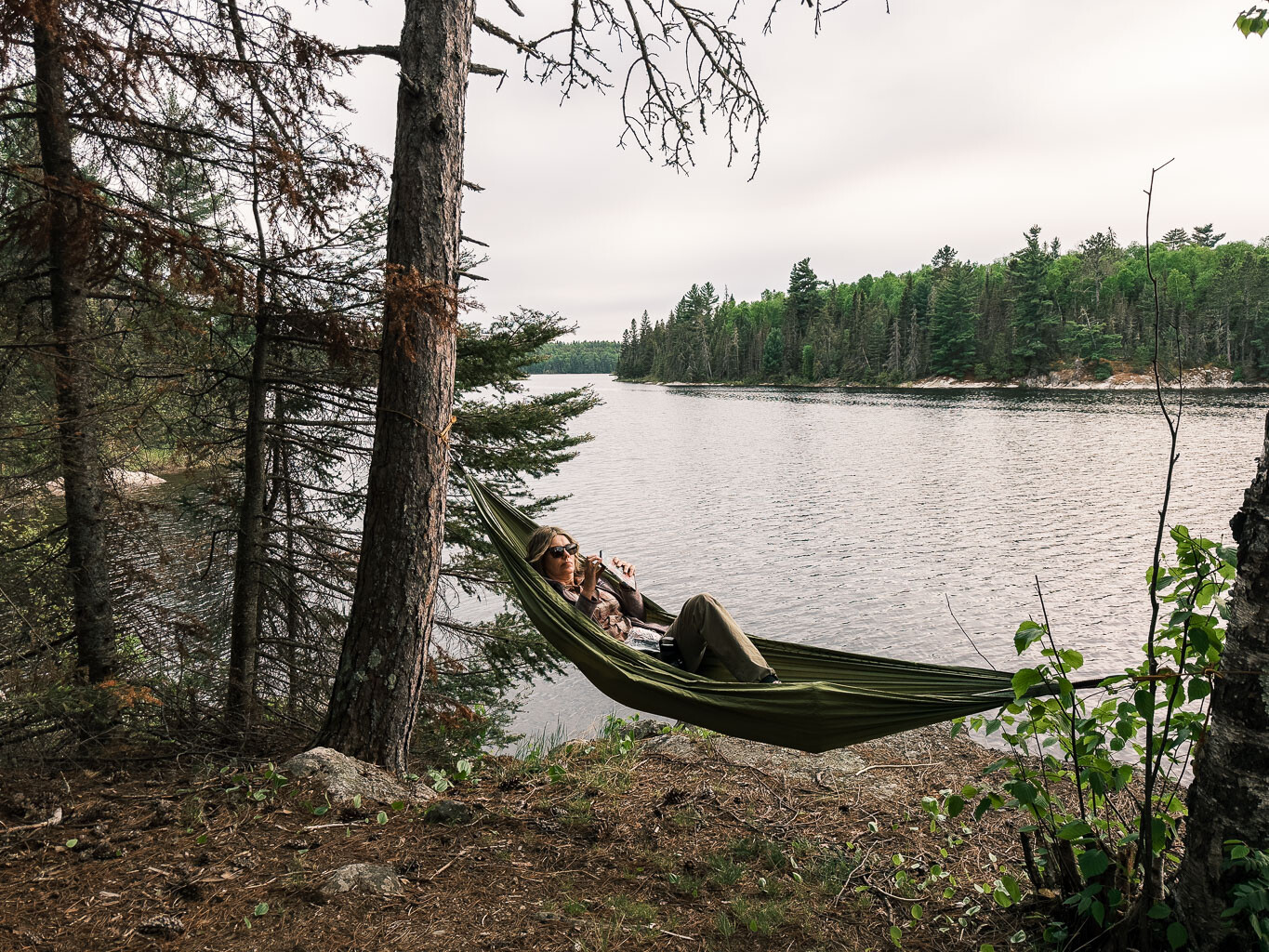
It’s always interesting to set up the first camp on an extended trip. Where the heck is everything? Did you forget the tent stakes? Thankfully nothing critical was forgotten and we managed to find all the necessary gear. It didn’t take long and we were relaxing in the hammock, reading our books and fishing from shore. I caught my first smallmouth bass and a nice sized pike offshore before supper.
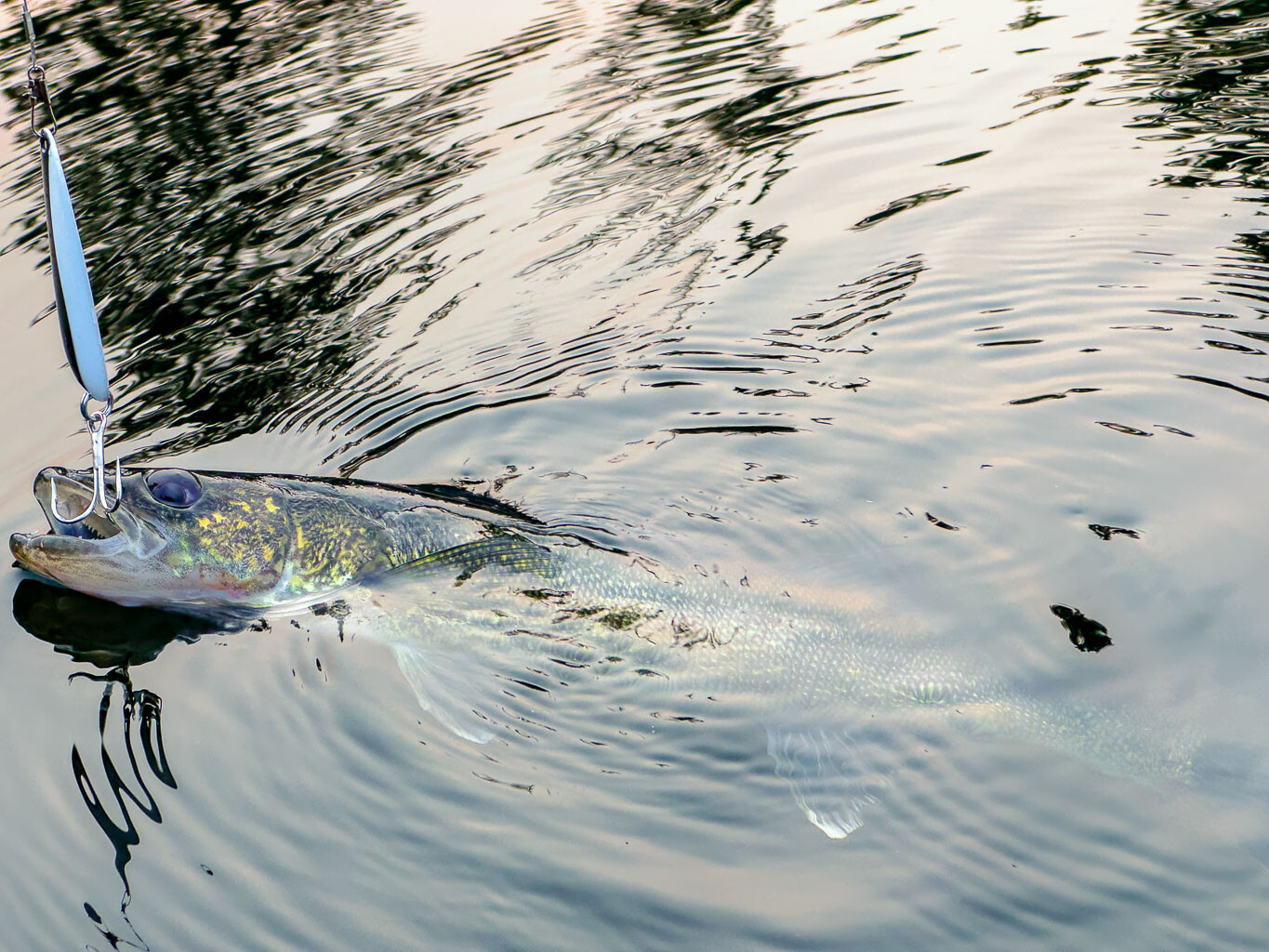
The lake was perfectly calm that evening so we went fishing for a bit, catching a few large walleye (completing a grand slam of 4 species of fish in our very first day) and spotting a majestic bald eagle and somewhat less majestic beaver.
As would prove to be the case for the next 2 weeks, we could not have a cheery campfire thanks to a fire ban. It was very obvious that the ban was necessary but it was a bummer nonetheless.
Not having fires significantly impacted our evenings at camp. There is nothing more relaxing and satisfying than cozying next to a crackling fire as darkness settles in and the bugs come out. Unfortunately we would not enjoy this simple pleasure. Instead, we sat around until the mossies became unbearable (usually just after sunset) and / or the air got chilly before retreating to the relative comforts of our sleeping bags.
This meant that most days (including the first one), we were in bed before 21:00 instead of enjoying the boreal evening and the waking of the heavens high above.
Sunday, June 1 2025 – Pickerel Lake to Oriana Lake (18km, 4 portages)
One advantage of going to bed early each night was that we were more than ready to get out of our tent by 06:30 or even earlier each morning. There is only so much time you can spend in a sleeping bag each night.
As usual, two city dwellers woke up a little stiff ‘n sore from a long paddle the day previous, but we were excited and raring to go. Calm waters beckoned and soon we were paddling out of the massive Pickerel Lake towards a 300m portage into Maria Lake. We made short work of this first, easy portage and noted how nice it was to be in green forests.
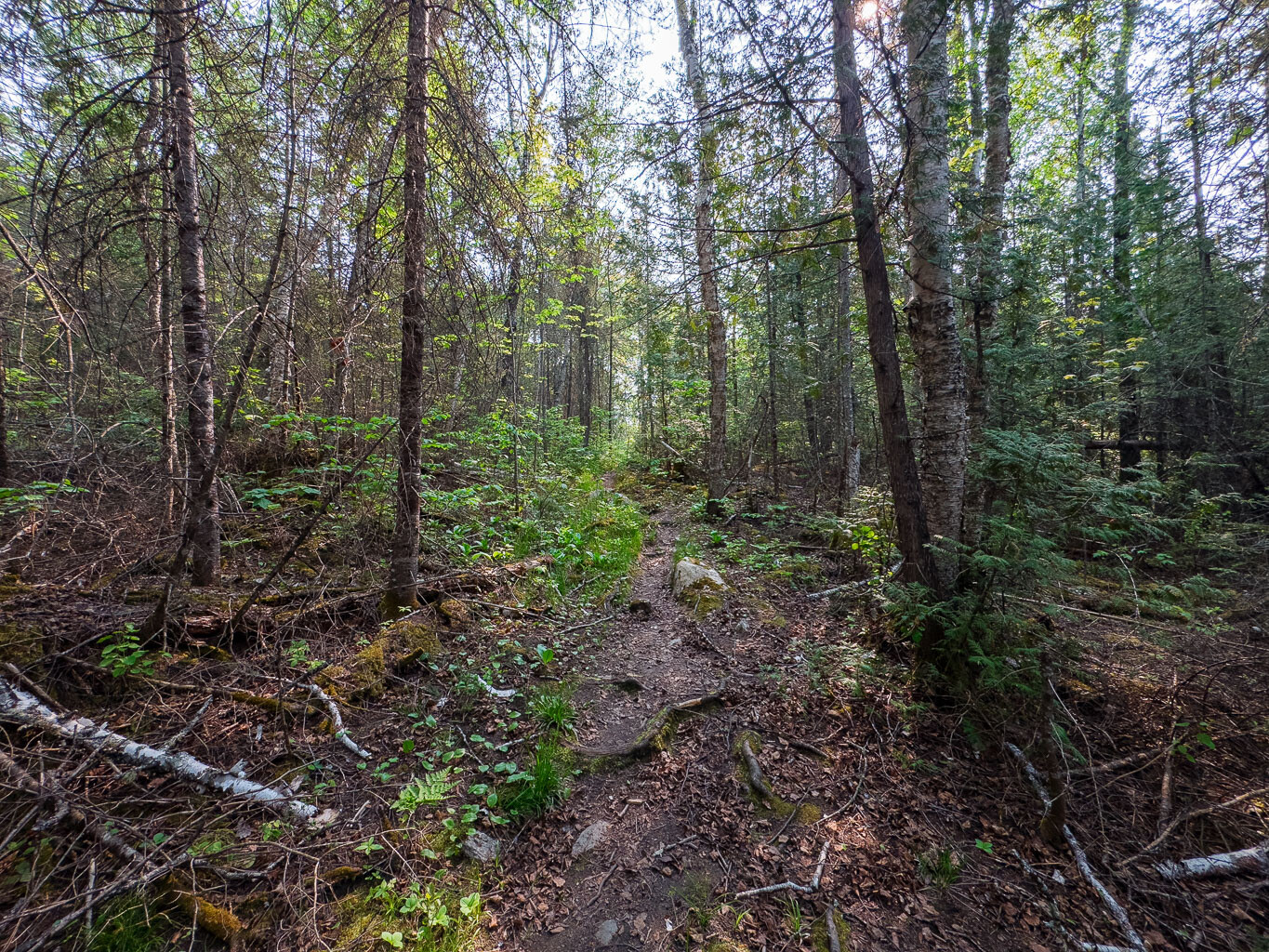
After crossing Maria Lake we faced a much longer 700 meter carry into Jesse Lake which also proved to be easy to find and follow. We would comment often about the luxury of well maintained portage trails throughout the rest of our trip. Compared to what we’re used to in WCPP, Quetico is paradise.
As we paddled lengthy Jesse Lake we noted how extremely dry the landscape was. As disappointing as the fire ban was, it was obvious that it was more than necessary. To be honest, I was surprised they were still letting people into the backcountry, everything was so tinder dry. With storms in the forecast I could see how one ill-placed strike would have a pretty serious consequence on our well being. I tried not to dwell on this thought as we continued up the calm waters of Jesse Lake.
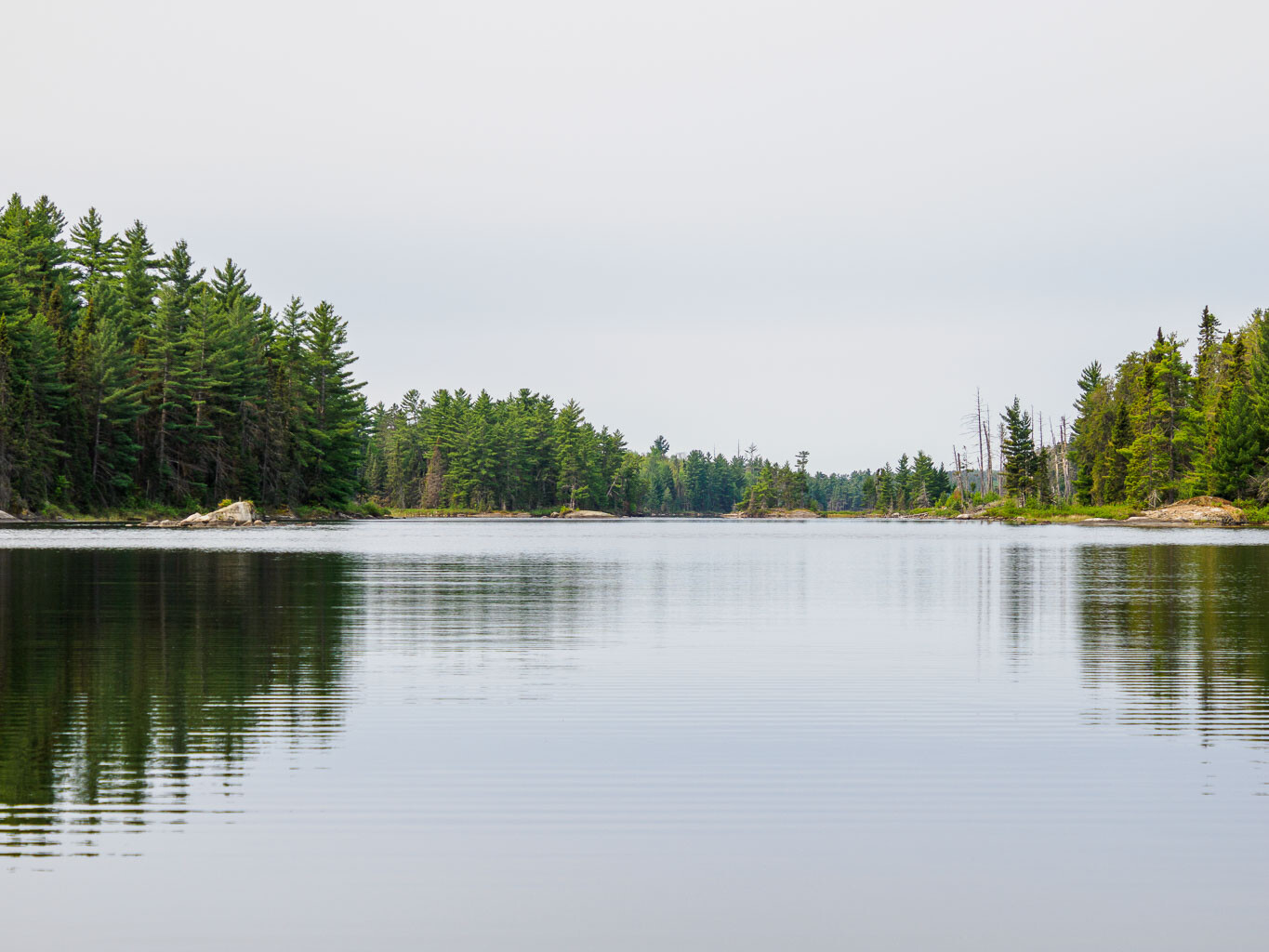
After a grand slam of Trout, Pike, Bass and Walleye on Pickerel Lake, fishing slowed significantly on our 2nd day in the park. Hann managed to nab a few nice sized walleye on our way through Jesse, but casting for pike didn’t produce anything. We didn’t mind.
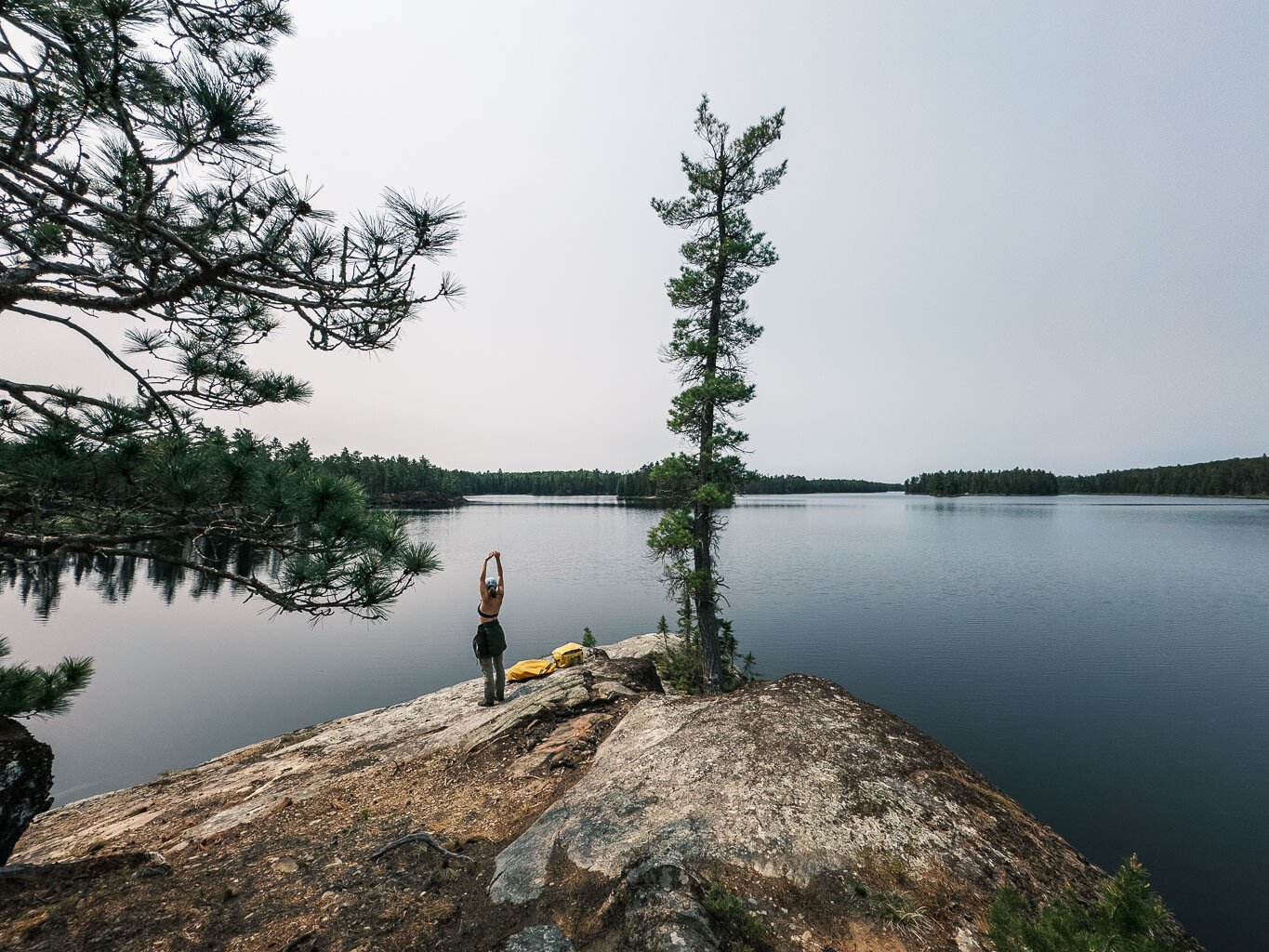
The mossies were brutal. For the first time in years, we had to wear our bug shirts on the portages – even spray wasn’t enough to keep them from flying into our mouths and biting the ONE place the spray didn’t land. Thankfully we’ve invested in the Canadian Bug Shirt – they more than proved their worth in quality and function on this trip. When it got too hot for both a regular shirt and the bug jackets, we simply took off the undershirt and just wore the jacket. This worked surprisingly well throughout the trip.
From Jesse we navigated two portages into Oriana Lake. The first was very short and easy, while the second was mostly downhill and also very easy to find and follow. Naturally, portages that are closer to the various park entries were going to be well traveled and maintained but we were very impressed nonetheless.
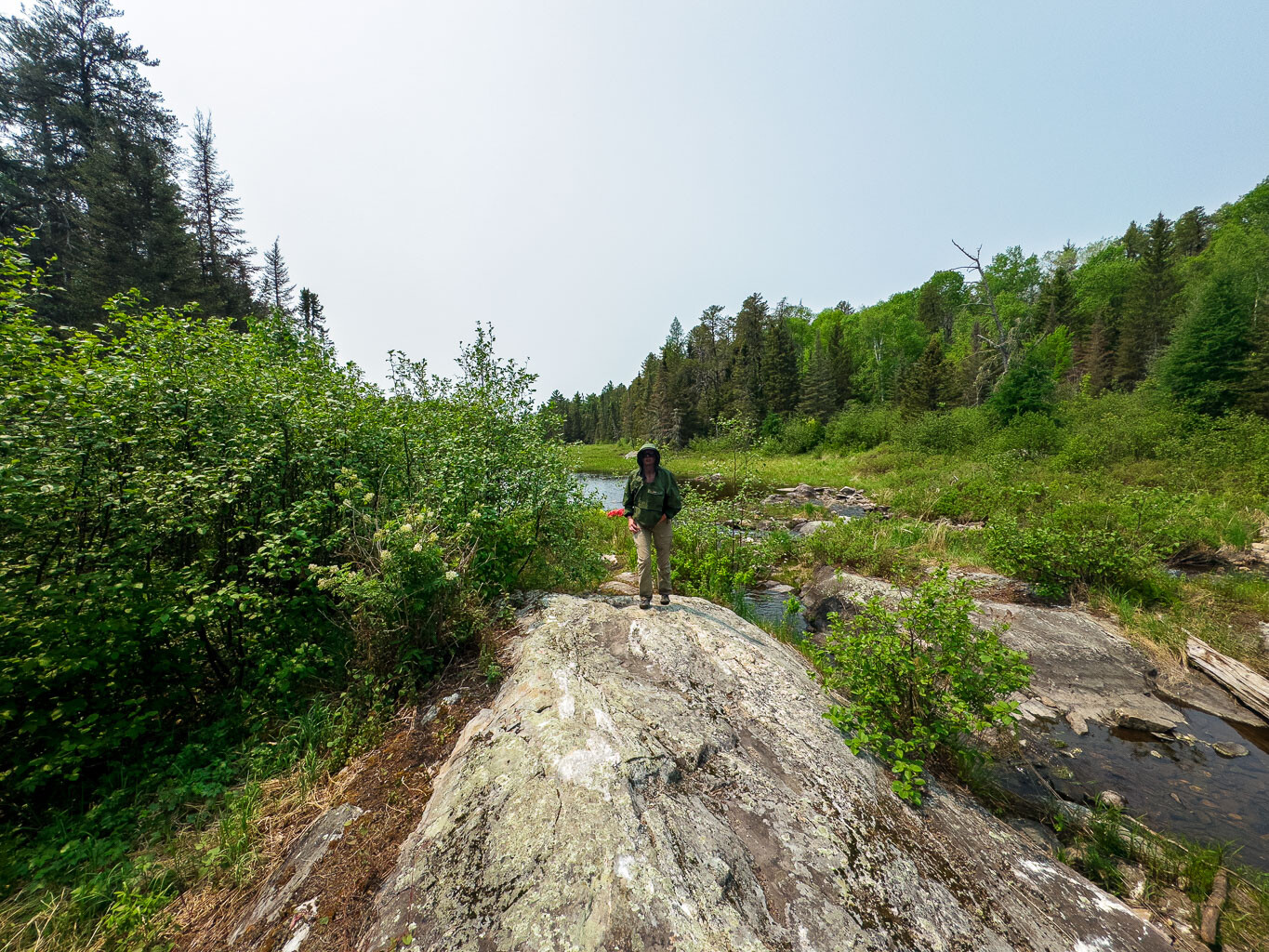
Oriana Lake seemed very low to us. The water line was at least 30cm lower than normal as indicated on the shoreline rocks. The afternoon heat settled in over a calm lake like a blanket as we paddled to our planned site, “H4” just north of our planned route towards Quetico Lake the following day.
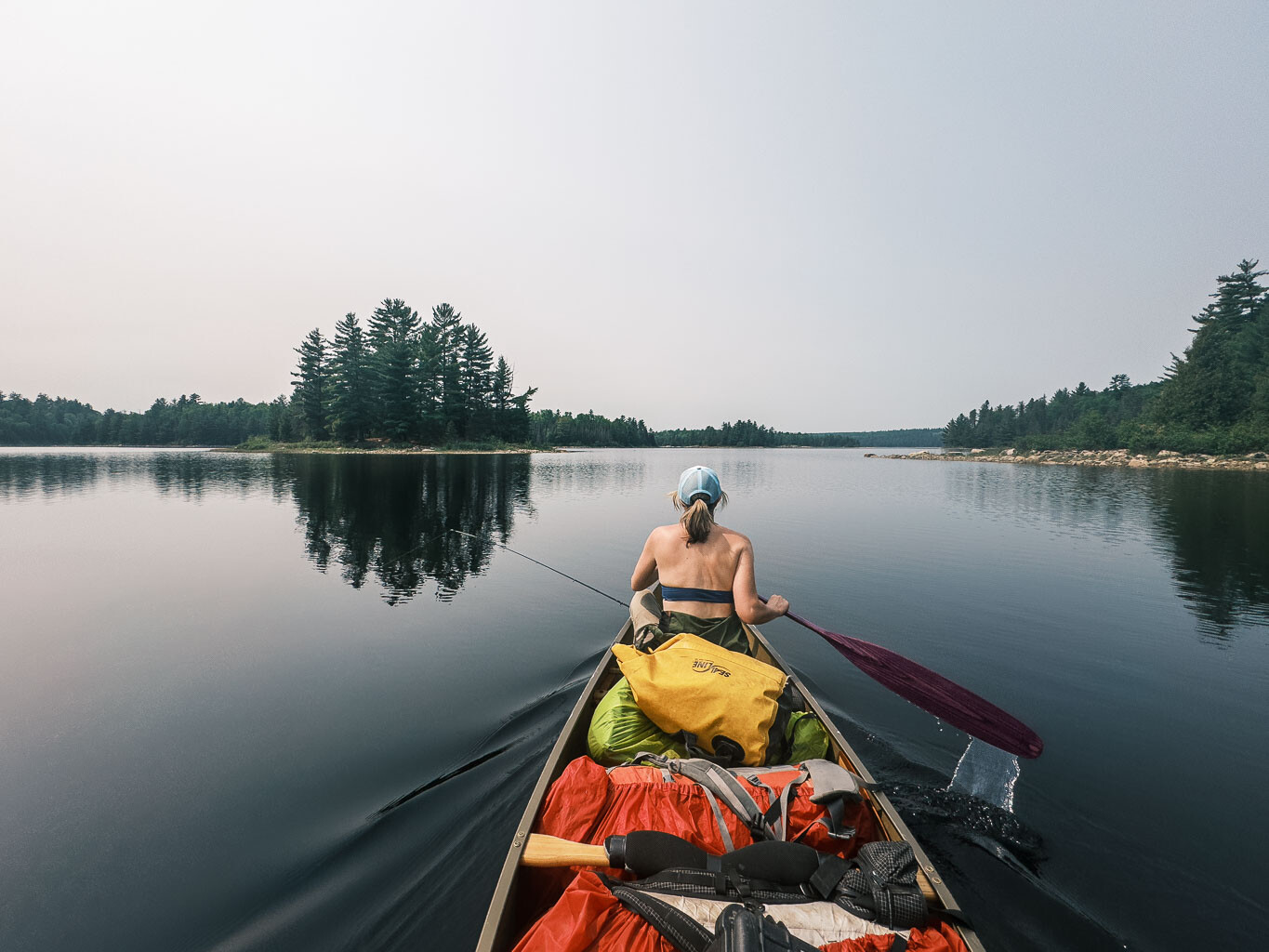
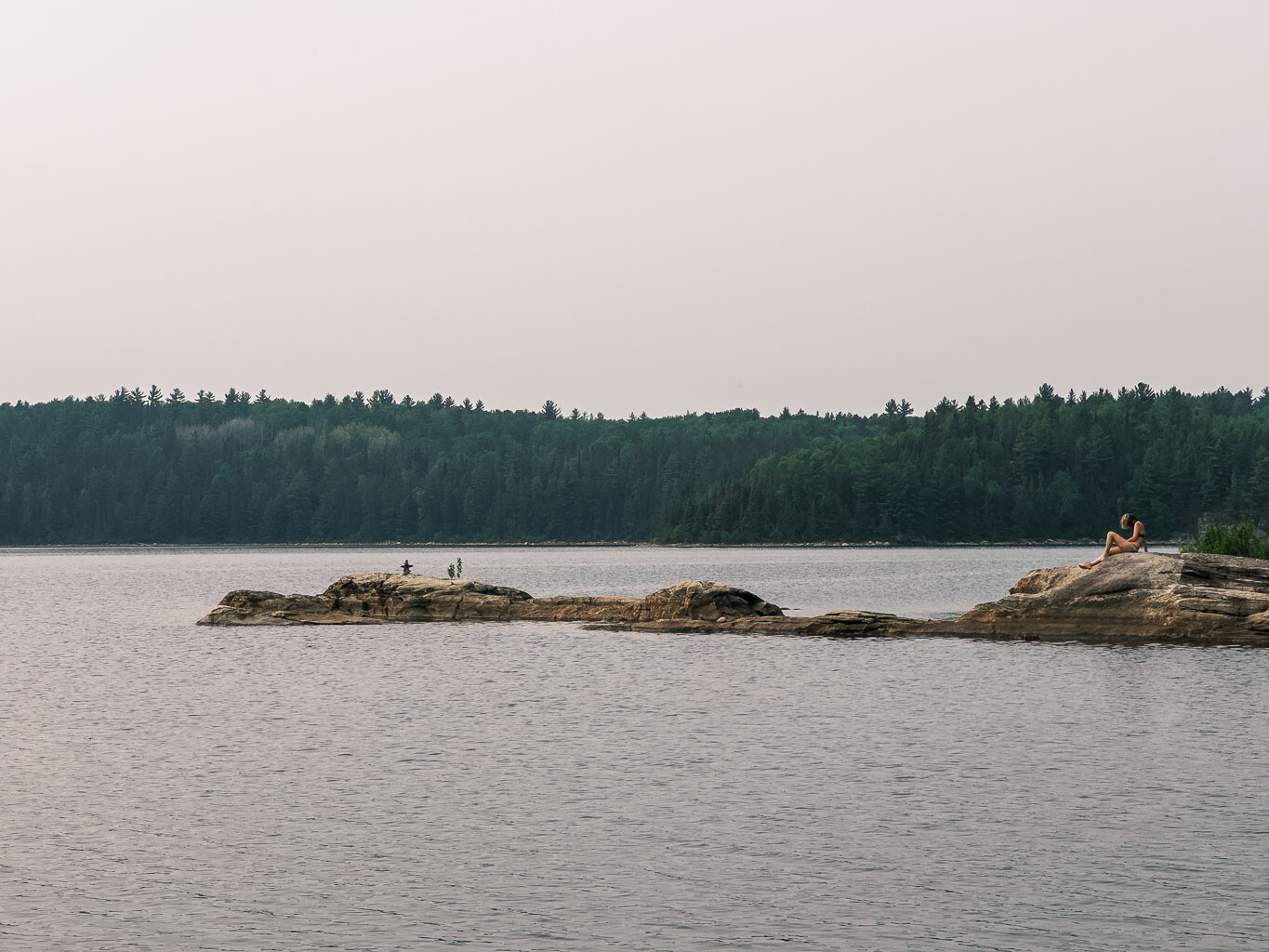
Thankfully the site was wide open and soon we were swimming off the day's grime before reading our books, doing laundry and just hanging around the large camp area. Thanks to the low water, there were plenty of flat rocky areas. The tent site was great with lots of room for larger parties. It was a well used site, as expected here. I caught a large walleye near camp for supper which was a great way to cap the day.
Before the trip, I’d purchased some top water bass lures. I’ve never fished for bass before, catching them only rarely by accident over the years. Most of the water I’ve canoed and fished is too far north to hold any numbers of this species. My brother told me they mostly caught Quetico bass on walleye lures and the day before I’d caught a few on jigs. Today I was going to try my fancy top water lures from Canadian Tire.
I strongly suspected they were more of a fisherman lure than a fish lure but we’d soon find out… I cast out an Arbogast G600 Jitterbug in the frog pattern and was instantly amused by the “plop”, “plop”, “plop” sound it made as it wiggled its way towards me through calm waters near camp. BAM!!! Believe it or not, on my very first cast a bass absolutely SMASHED the little lure! A few casts later I had the same result. Ok, I guess the expensive little lures were more than fisherman’s wallet bait after all. I resolved to try a LOT more of that – it was damn good fun.
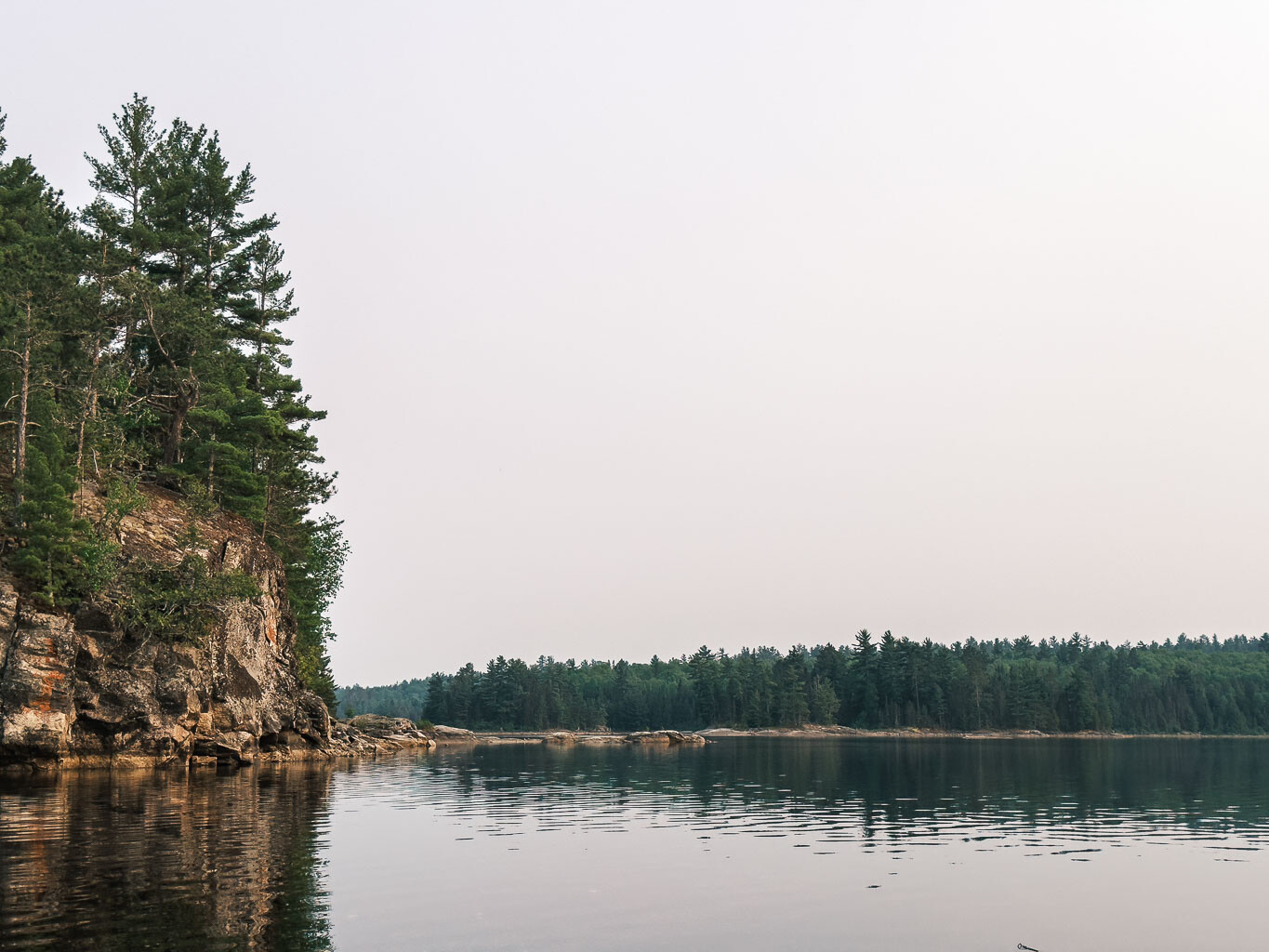
Once again, we were tired and getting cold and swarmed by mossies by 21:00 and turned in before the sun fully set. I was checking weather using my iPhone’s satellite texting capabilities and BoltWX and storms were in the forecast. I guess we’d see what the next day would provide – but I sincerely hoped it wouldn’t be too much lightning.
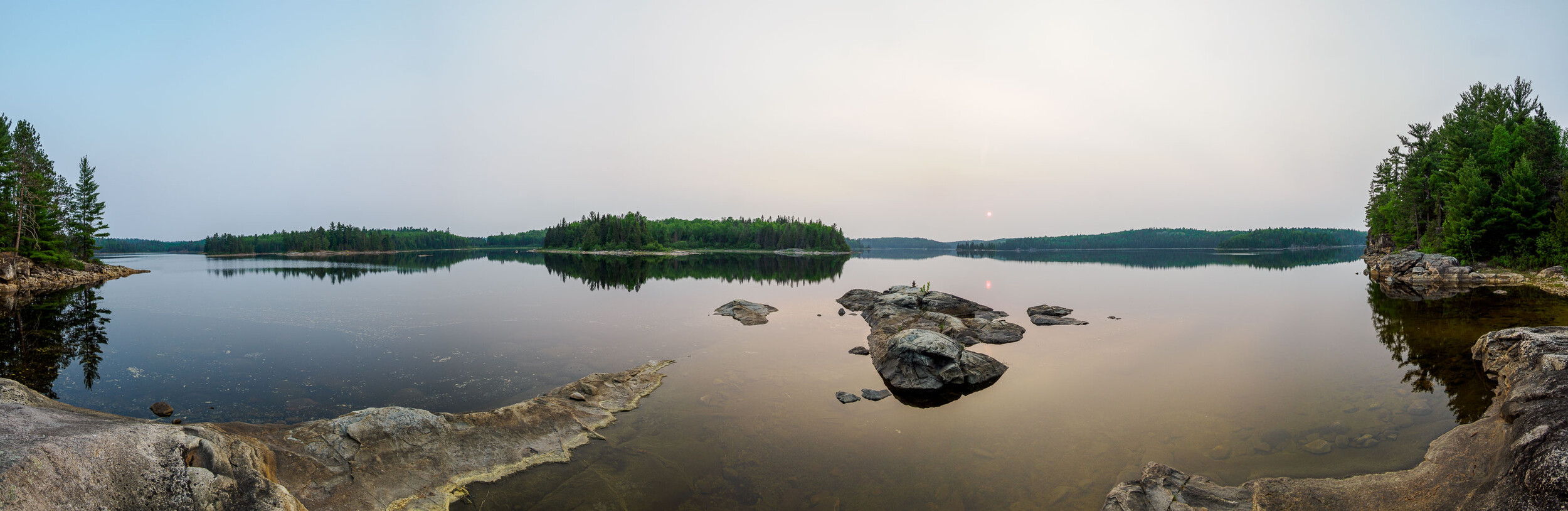
I was also texting my son back in Calgary, asking him to check on wildfires in the area and the fire ban. He assured me that there were no nearby conflagrations and the ban was still in place. There is something lost when connecting from the backcountry to the wider world. In the good ol’ days (:eyeroll:), you went into the bush for 7 or 14 days or longer, with nary a clue about the outside world or what was headed your way.
 Donate - BWCA.com