



BWCA Entry Point, Route, and Trip Report Blog
September 04 2026
Entry Point 14 - Little Indian Sioux River North
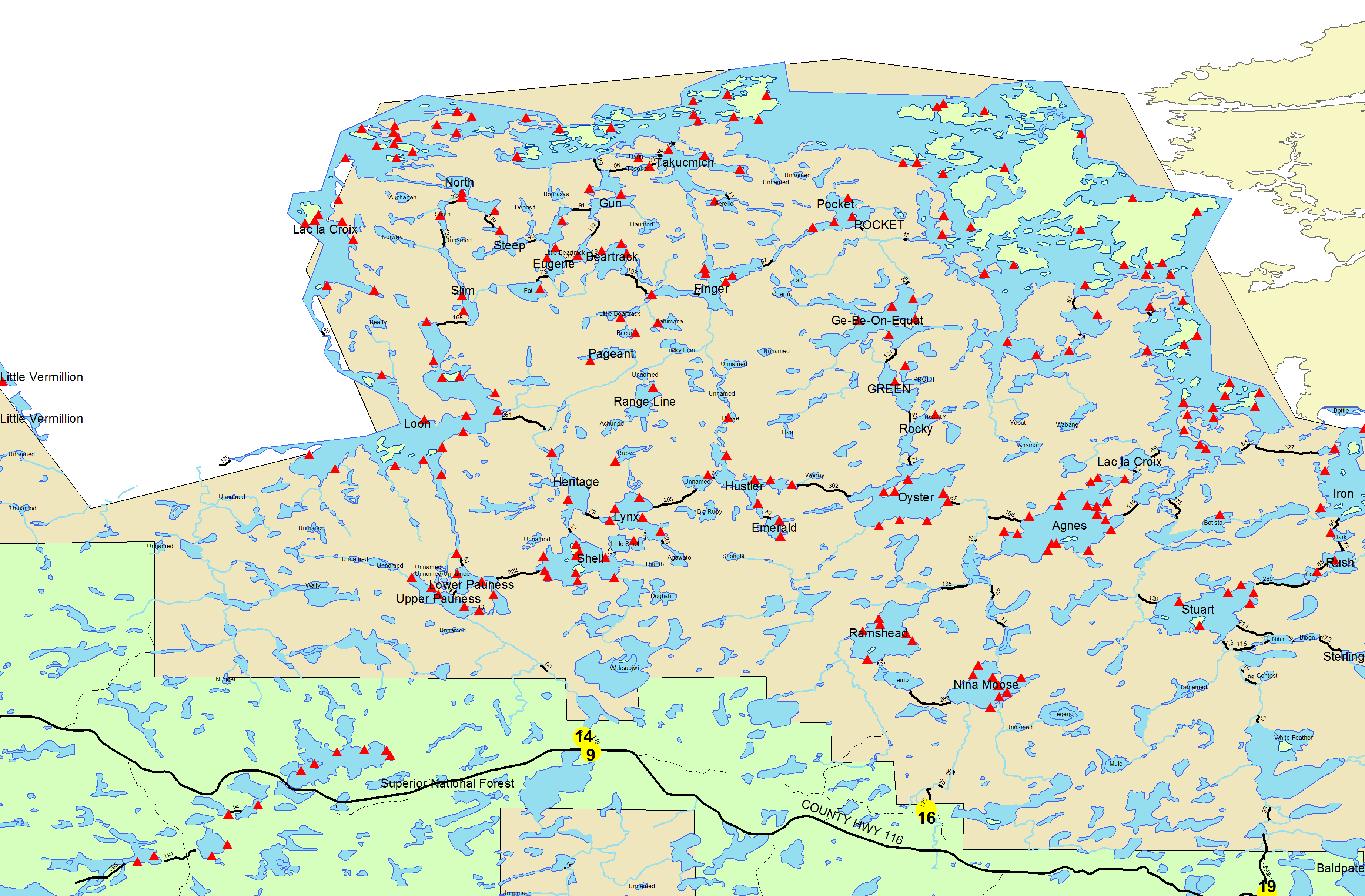
Little Indian Sioux River (north) entry point allows overnight paddle only. This entry point is supported by La Croix Ranger Station near the city of Ely, MN. The distance from ranger station to entry point is 32 miles. Access is a 40-rod portage heading North from the Echo Trail.
Number of Permits per Day: 6
Elevation: 1364 feet
Latitude: 48.1466
Longitude: -92.2103
Number of Permits per Day: 6
Elevation: 1364 feet
Latitude: 48.1466
Longitude: -92.2103
Solo2025
by egknuti
Trip Report
Entry Date:
June 11, 2025
Entry Point:
Little Indian Sioux River (north)
Exit Point:
Moose/Portage River (north) (16)
Number of Days:
15
Group Size:
1
Trip Introduction:
Day 1 of 15
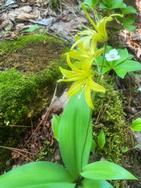
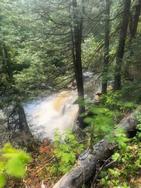
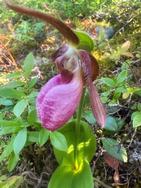
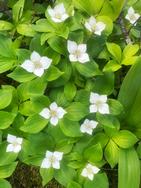
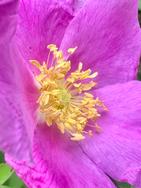
June 11 On June 9, I said goodbye to my wife and headed to Embarrass, Minnesota, where my elderly parents live. The next day, I picked up my permit, bought a few more supplies, and packed the rest of my gear. Every year I promise myself I'll cut down on weight, but no matter how much I leave behind, I always seem to find something else to pack. I'm carrying more than two weeks' worth of food in case I decide to stay longer than planned. That happened last year when high water on the Moose River forced me to reroute. I also never know how much fish I'll be eating, so it's best to be prepared. My dad, now 84, follows behind me with my canoe loaded in the back of his truck. We drive down the Echo Trail, a road filled with memories of family camping trips. I know he's reminiscing too, and I suspect he wishes he were coming with me. We arrive at the Indian Sioux North Entry Point around 9:15 a.m. The first thing I notice is the almost complete absence of bugs—a pleasant surprise for June. After unloading my canoe and gear, I say goodbye to my dad and begin the short downhill portage to the river. Along the trail, Moccasin Flowers, Blue-bead Lilies, and Bunchberries are in full bloom. My sister passed away in March after a long battle with cancer, and thoughts of her weigh heavily on my mind as I slip quietly into the river beneath a hazy sky stained by Canadian wildfire smoke. My older brother died sixteen years ago, and now she's gone too. My younger sister lives in California with her family, but because of the distance and her own health challenges, we don't communicate very often. I've become the child who will care for our aging parents. As the third child, I always looked to my older brother and sister for guidance. I assumed they'd be here to help when this stage of life arrived. I never imagined I'd be facing it mostly alone. It takes me about three and a half hours to reach Shell Lake. The portage from Lower Pauness into Shell is still partially flooded from beaver activity, forcing me to ferry my canoe across one section before continuing. The middle campsite on Con Island is open, so I decide to call it home for the night. It has an excellent landing, a decent cooking area, and several sturdy trees for hanging my food and gear. The forecast looks clear, so I decide not to set up the tarp. By the time camp is organized, I'm exhausted. I sink into my Crazy Creek chair, close my eyes, and drift into a short afternoon nap. Dinner is one of my favorites: a Knuti steak—my dad raises Black Angus cattle—grilled over the fire with instant mashed potatoes and broccoli. As evening settles in, I paddle out to fish. I catch a few bass and one keeper walleye before the sun drops below the trees. Back at camp, I build a small fire and settle into my first night in the Boundary Waters. 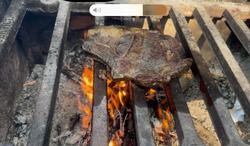
Day 2 of 15
Thursday, June 12, 2025 It was a cold night. I bring my 0-degree sleeping bag regardless of the season, and last night I was grateful for it. Even so, I had to pull on a few extra layers before I was warm enough to sleep comfortably. The morning is just as chilly. Thankfully, I always pack my winter running pants and long-sleeved shirt, no matter what the forecast says. Experience has taught me never to trust June weather in the Boundary Waters. After making coffee, I decide on a walleye-and-eggs breakfast. I paddle away from camp, trolling a jointed Rapala as I head toward one of yesterday's fishing spots. Within ten minutes, I land a nice eater-sized walleye. I paddle back to camp and fry it alongside a couple of eggs before pouring myself another cup of coffee. Later that morning, I run into a Forest Service crew. Of course, my permit is still back at camp. They follow me back so I can retrieve it, and after a quick inspection, we exchange a few friendly words before continuing on our separate ways. I spend the rest of the day fishing. The bite is slow, but during the afternoon I catch a beautiful 18-inch walleye that becomes dinner. I was convinced I'd found the hot spot, but no matter how many times I drifted back over the same area, I couldn't catch another fish. Tonight's dinner is pita pizza, and once again I'm amazed by the lack of mosquitoes and deer flies. There appear to be only two other groups camped on the lake, making Shell feel wonderfully quiet. 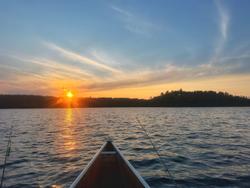
Day 3 of 15
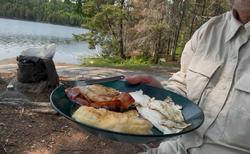
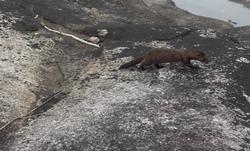
Friday, June 13, 2025 Another cold night makes it difficult to crawl out of my sleeping bag. Eventually, I force myself up and start the coffee. I'm not hungry right away, so I paddle out, hoping to catch another walleye for breakfast. Instead, all I find are perch. Back at camp, I settle for eggs and bacon with another mug of coffee. Later, while trolling with my jointed Rapala, my rod suddenly doubles over. A few moments later, a 34-inch northern pike slides into the net. After admiring the fish for a moment, I release it and continue fishing. Not long afterward, I catch a nice walleye for shore lunch. Almost in the exact same location, my rod bends over again. This fish feels even heavier. Without a leader, I'm convinced the pike will bite through my line. I keep steady pressure on the fish, careful not to rush it. Somehow, everything holds together, and soon I'm looking at a magnificent 37-inch northern lying beside the canoe. I stop at another campsite for a short break, one where I camped nearly twenty years ago. I remember that trip well. It was cold, windy, and I was completely unprepared. Back then, I carried only a 40-degree sleeping bag. I slept wearing every piece of clothing I had and still woke up shivering through the night. Since that trip, I've never questioned bringing my 0-degree bag, no matter the season. As I sit overlooking the lake, my thoughts return to my sister. Memories come flooding back, especially of the last time I saw her. She fought her cancer with remarkable courage until the very end. Before leaving her room, I told her I loved her, that I would miss her, and that it was okay to let go. As I walked out the door, I somehow knew it would be the last time I would ever see her. Dinner is my dehydrated Mexican chicken in green sauce with rice and refried beans, wrapped in a tortilla. I spend a few more hours fishing before settling into my chair beside a small fire. Four other groups have arrived on the lake tonight. Before crawling into my tent, I check tomorrows weather one last time. The forecast calls for calm winds, and I'm relieved. Tomorrow I'll be crossing Loon Lake, and large, windblown water is never something I look forward to. 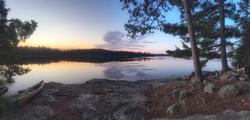
Day 4 of 15
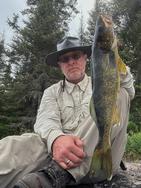
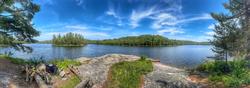
Saturday, June 14, 2025 Another cold night. Thankfully, I have my long underwear and 0-degree sleeping bag. I wake around 4:00 a.m. but don't crawl out until 5:00. As always, the first order of business is coffee. Breaking camp usually takes me an hour and a half to two hours. I'm not very hungry this morning—probably nerves. A long travel day lies ahead, and I never enjoy crossing big water. After loading the canoe, I paddle toward the Heritage portage. The landing is rocky and awkward, the kind that demands extra caution when traveling alone. The portage itself is short, and before long I'm winding my way through the shallow creek that leads into Heritage Lake. The devastation from spruce budworm is impossible to ignore. Hundreds, perhaps thousands, of dead spruce line the western shoreline, their gray trunks standing like silent skeletons. Both campsites are empty, and as I paddle through Heritage Creek, the only sounds are the songs of White-throated Sparrows and chickadees. The portage into Loon Lake is about 220 rods. The first half climbs steadily until it meets the Sioux-Hustler Trail, then drops down to a sandy beach. Unfortunately, Loon also means motors. Before long, I hear them. Despite being in the wilderness, the sound carries surprisingly far. Loon is relatively calm today, but I stay close to the eastern shoreline rather than risk crossing open water. As I pass an occupied campsite, the steady hum of a generator drifts across the lake. While I understand that motors are allowed here, I've always felt they invite people to push the limits of what wilderness should be. From Loon, I continue through Little Loon and toward Slim Lake. The portage into Slim is 158 rods, beginning with a steep uphill climb. With my food pack on my back and the canoe overhead, I step onto an uneven rock and suddenly lose my balance. For a split second, I'm sure I'm going down and falling backward. For a moment, I feel my body and canoe shift as if an invisible hand has steadied me. I regain my balance. I stand there for a moment, my heart racing. Traveling alone leaves no room for carelessness. A simple fall can end a trip—or worse. After taking a few deep breaths, I continue on. On Slim, I meet a father and son heading toward Heritage. They ask if the northern campsite on Heritage is open; I tell them it was empty when I came through. There's a beautiful campsite perched high on a large granite outcrop overlooking the lake, but reaching it requires a steep climb. The campsite has a beautiful view of Slim Lake, but walking up and down the steep rock is not inviting after an already long day. Since it's only noon, I decide to keep moving toward North Lake. The narrows leading north are lined with towering red and white pines—true old-growth forest, something increasingly rare in the Boundary Waters. Last year, high water allowed me to bypass the Section 3 Pond portage, but this year I have to get out and drag the canoe through the shallows. Scratches are simply part of canoe travel, especially on rivers. About six hours after leaving Shell Lake, I arrive at North Lake. I'm exhausted. The first campsite near the portage isn't spectacular, but it'll do. It has decent tent pads, an adequate cooking area, and easy access to the water, though hanging food will be a challenge. As I look around camp, I realize I've completed one of the hardest travel days of the trip. More importantly, I can feel my body settling into the rhythm of wilderness travel. Lunch is simple: a bagel with peanut butter and honey, homemade jerky, and dehydrated chickpeas. I sink into my Crazy Creek chair and promptly fall asleep before even setting up my tent. Later that afternoon, I paddle around the lake to explore the other campsites. The northern site shows little sign of recent use. The eastern site looks promising from the water but proves disappointing once I land. While wandering through camp, a ruffed grouse calmly struts across the forest floor, seemingly unconcerned by my presence. On the troll back to camp, I catch a couple of small northern pike before calling it a day. Dinner is pasta with a basil-red sauce that I dehydrated before the trip. I enjoy this east-facing campsite. Late afternoon on a west-facing site can be brutally hot as the sun beats down and reflects off the water. Normally, I'd spend the evening paddling around the lake, but tonight I'm simply too tired. Instead, I build a small fire, settle into my Crazy Creek chair, and watch evening slowly settle over the water. As darkness gathers, a Barred Owl gives a distant, haunting call. Tonight, I have the entire lake to myself. 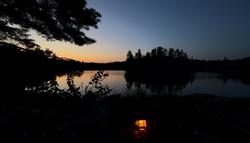
Day 5 of 15
Sunday, June 15, 2025 I wake during the night feeling chilled and pull on my long-sleeved running shirt. Around 3:00 a.m., I wake again and can't get back to sleep. Travel days always make me a little anxious, especially when I'm heading into country I've never explored before. Lying quietly in my sleeping bag, I listen as the forest slowly begins to wake. By 5:00 a.m., I finally climb out of the tent. A thin layer of fog hangs over the lake. Coffee comes first. As I break camp, the familiar routine settles my nerves. By 7:00, I'm ready for breakfast—eggs and bacon—before pushing off. I've never paddled this section of Lac La Croix, and the thought of exploring new water excites me. Leaving North Lake, I paddle west into Lac La Croix before turning east. A short portage allows me to avoid one of the larger expanses of open water. The lake is calm, making for an easy crossing. About three hours later, I arrive at Takucmich Lake. The campsite I hoped to claim is occupied. I paddle over and ask when they're leaving. "About an hour," one of them says. I ask if I can leave my gear nearby and spend the next hour fishing while they pack up. Thankfully, they agree. After a few promising strikes, I return to find the campsite vacant. One of the departing campers warns me about an unusually friendly red fox that often wanders into camp around dinnertime. I make lunch, set up camp, and by early afternoon I'm back on the water searching for lake trout. The forecast calls for several days of light winds—perfect conditions. Even in this remote country, reminders of civilization are never far away. Boats move across the Canadian side of Lac La Croix, and later I hear a helicopter pass overhead. For lake trout, I keep things simple: a silver Little Cleo behind a three-ounce weight with roughly a hundred feet of line. Nothing fancy. Usually, that's all it takes. After an hour of trolling, I reel in my line and discover my spoon has twisted around the leader. I haven't been fishing at all. Laughing at myself, I head back to camp to straighten everything out. Ten minutes after getting back on the water, I land my first lake trout of the trip. This time of year, trout spoil quickly on a stringer, so I always carry my stove and frying pan for impromptu shore lunches. I fillet the fish with the skin on, season it with garlic salt, pepper, and paprika, and fry it until the edges are crisp. The trout isn't quite enough for dinner, so I supplement it with dehydrated Mexican beef in red sauce. Throughout the afternoon, painted turtles crawl onto the warm rocks near camp, searching for places to lay their eggs. Whenever I move, they quickly slide back into the water. Sure enough, around dinnertime, the red fox strolls confidently into camp. He's beautiful—but entirely too comfortable around people. It takes nearly fifteen minutes to convince him to leave, and I'm fairly certain previous campers have rewarded his boldness with food. Later that evening, I send my wife a short InReach message letting her know I'm safe. As darkness settles, I watch one of the turtles finally choose a nesting site before slowly making her way back into the clear waters of Takucmich. 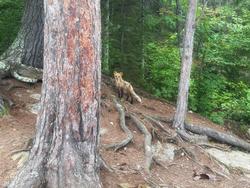
Day 6 of 15
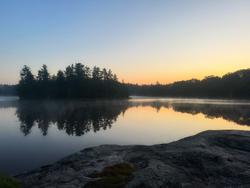
Monday, June 16, 2025 Once again, I sleep later than I intended. I can't seem to find the motivation to get out and fish. During the night, my thoughts kept returning to my sister and to the responsibility of caring for my parents as they continue to age. Coffee in hand, I walk over to where the turtle laid her eggs last night. They're gone. Some predator dug up the nest during the night. Nature can be unforgiving. Breakfast is the last of my fresh eggs with precooked bacon. It isn't until nearly 10:30 that I finally push away from shore. I catch a beautiful 20-inch lake trout but decide it's too large for what I need, so I release it back into the deep, cold water. By early afternoon, I haven't caught another fish, so I return to camp for lunch. Dark clouds are building to the west. Reluctantly, I decide it's time to put up the tarp. Whenever possible, I'd rather leave it packed away, but years of wilderness travel have taught me otherwise. I've spent entire days reading beneath that tarp while rain poured relentlessly outside. After lunch, I head back out, hoping to catch either a late lunch or an early dinner. A few fish strike, but none stay hooked. Finally, just as I'm preparing to head in, I land another lake trout about the same size as the previous one. Rain begins as I clean the fish. Normally, I'd cook it over a fire away from camp, but with steady rain falling, I fry it beneath the shelter of my tarp. The shower eases briefly, and I prepare to launch again. The moment my canoe reaches the water, the rain returns. Then comes thunder. Fishing is finished for the day. There's something about sitting beneath a tarp while rain drums overhead that invites reflection. I find myself weighing tomorrow's options. I could head south through Gun, Beartrack, Thumb, and Finger Lakes. Or I could return to Lac La Croix, make my way to Pocket Creek, and continue toward Gebe-on-equet. The second route appeals to me, but it means crossing more of Lac La Croix's big water. That thought makes me uneasy. The rain continues well into the evening. Around 8:30, I retreat to my tent, read for a while, and let the steady rhythm of rain on nylon carry me off to sleep. 
Day 7 of 15
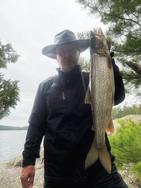
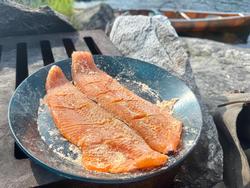
Tuesday, June 17, 2025 The rain continued until two or three in the morning. I didn't sleep well. Thoughts of my sister and my parents drifted through my dreams, leaving me restless. Negative thoughts have a way of taking hold during a solo trip. Without anyone to share them with, it's easy to let worry grow until it overshadows the very experience you've come to enjoy. I had planned to get an early start fishing, but by 11:00 a.m. I was still lingering around camp. Someone had given me a Mountain House breakfast skillet a few years ago, and I'd been carrying it ever since. This morning seemed like a good time to finally try it. It was disappointing. All I could taste was smoke. The eggs, ham, and peppers had almost no flavor. I'll stick with my own dehydrated eggs from now on. The wind is stronger than I expected, with occasional heavy gusts, so I decide to spend the day on nearby Trygg Lake in search of brook trout. After reorganizing my gear for the short portage, I carry my canoe up the steep fifteen-rod trail. The lake is quiet. I troll a blue jointed Rapala, hopeful after the success I had here on a previous trip. The first brook trout comes unhooked beside the canoe just as I reach for the net. An hour later, another one escapes in exactly the same way. By late afternoon, I'm beginning to think today simply isn't my day. Around 5:30, I decide to make one last pass before heading back to camp. I'm glad I do. The rod bends sharply, and after a brief fight, I slide a beautiful sixteen-inch brook trout into the net. That fish becomes dinner. 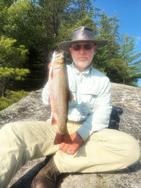
Day 8 of 15
Wednesday, June 18, 2025 For the first time on this trip, I sleep in. By the time I crawl out of the tent, it's nearly 7:30. As always, coffee comes first. Some of my favorite moments in the Boundary Waters happen before I ever launch the canoe. Sitting quietly with a warm mug in my hands, watching the mist lift from the lake while the forest slowly wakes, is reason enough to come here. I fish for a couple of hours and catch only one lake trout. While trolling a Klose lure, I stop to slowly jig it beneath the canoe. Almost immediately—bam! A solid twenty-inch lake trout. It's larger than I need, so after a quick look, I release it back into the deep water. The rest of the afternoon passes without another fish. Eventually, the wind begins to rise, and rain follows. Oddly, although I can hear the wind howling across Lac La Croix, Takucmich remains relatively sheltered. Tonight's dinner is pita pizza beneath the tarp. Normally, I'd spend the evening paddling the shoreline, but fatigue has caught up with me. Instead, I sit beside a small fire and watch evening settle over the lake. Tomorrow I'll be traveling through country I've never seen before. The thought excites me, but crossing another stretch of Lac La Croix gives me pause. As the sun slips behind the trees, the cooling forest releases the rich scent of damp earth, pine, and cedar. 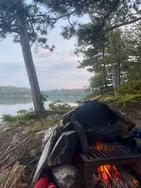
Day 9 of 15
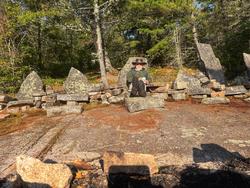
Thursday, June 19, 2025 I've spent four nights on Takucmich without seeing another person. At five o'clock, I climb out of the tent and begin breaking camp. The forecast calls for calm winds, but the lake tells a different story. Strong gusts already sweep across the open water. I hope conditions improve by the time I reach Lac La Croix. After leaving Takucmich, I'm sheltered from most of the wind. That changes the moment I round the point and enter Lac La Croix. A stiff northeast wind meets me head-on. Far to the north, a storm is moving across Canada, but I'm feeling its effects here. For a while, I'm able to stay tucked behind Twenty-Seven Island, but eventually the protection disappears. Now there's nowhere to hide. Two- to three-foot rollers pound against the canoe. I should have waited. Instead, I keep paddling. Each stroke gains only a little ground before another wave lifts the canoe and pushes it backward. Hugging the shoreline isn't much better. The waves crash against the rocky cliffs, rebound, and collide with the next set, sending confused water in every direction. For twenty minutes, I feel less like a canoeist and more like a fishing bobber. My heart pounds. The paddle never stops moving. Gradually, I begin quartering into the waves, angling south instead of fighting them head-on. Finally, I gain enough ground to turn and surf diagonally into the shelter of a broad bay. Almost immediately, the water calms. I laugh to myself. I should have waited. Although my pulse was racing during the crossing, I never felt out of control. I've spent enough years in a canoe to understand both my abilities and my limits. Had I capsized, however, the consequences would have been serious. Sometimes confidence and good judgment are separated by only a few minutes of patience. With the difficult crossing behind me, I continue east, following the southern shoreline of Lac La Croix. Eventually, I reach the Pocket Creek portage. Standing quietly along the shoreline is a cow moose with her calf. Neither seems particularly concerned by my arrival. For several minutes, we simply watch one another. Then, without hurry, they turn and disappear silently into the forest. I sit quietly in my canoe for another minute before continuing on, grateful for one of those moments that can never be planned. A short portage out of Lac La Croix leads into Pocket Creek. The creek looks quite low, probably due to a beaver dam or two. It's a short paddle to Gebe Creek, and right away I'm met with a small beaver dam that is fairly easy to cross. The next dam is much larger and requires me to get out and pull my canoe over. The portage into Gebe-on-Equat is straight uphill but relatively short. It took me four hours to get from Takucmich to the north end of Gebe. To my surprise, three of the five sites are occupied. The last few years I've stayed on the lake, I've seen very few people. The two best sites are taken, so I'm forced to take the "Chairs" site. This is the site where people made Adirondack chairs out of slabs of stone. To my surprise, they are quite comfortable. I also realize the actual campsite is down and a bit south of where the chairs are. The site itself is average, but it will suit me fine for two nights. Unfortunately, the previous group threw fish remains into the lake. By two, I've got my camp set up, and I feel exhausted. I decide to set up my tarp, with all the thunder and dark clouds around me. I don't think I'll need it, but I don't want to set it up in the pouring rain if it comes. I have dinner, make a fire, and enjoy a bug-free evening. 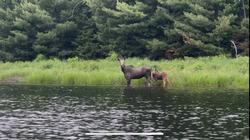
Day 10 of 15
Friday, June 20, 2025 I slept well and woke to another beautiful, cool morning. I boil my water and take my coffee over to the "Chairs" to take in the morning. As I enjoy the morning, listening to the chickadees and White-throated Sparrows and watching a snowshoe hare hop around me without any fear, my thoughts turn to my sister and the last time I saw her. My sister was a fighter, and I know she wanted to beat cancer. I told her it was okay to go. She didn't need to fight anymore. As I talked to her, I could see tears around her eyes. I know she could hear me. I don't want my last memory of my sister to be looking at her dying in hospice care—but I know I would have regretted not being there. For breakfast, I made instant steel-cut oats and my dehydrated eggs with Canadian bacon. Over the years, I've gotten rid of the freeze-dried meals and dehydrated all of my meals. It looks like everyone has left, and I'm the only one left on the lake. I plan on fishing the rest of the day. My main goal is finding walleye. The first time I stayed on Gebe, I caught several walleye over 24 inches, but subsequent visits have yielded nothing, despite fishing all day. Today seems to follow the pattern. Gebe is definitely a great smallmouth bass lake, but finding walleyes has been quite a challenge. Gebe also has whitefish, but I don't know how to fish for them during the summer. I give it a shot anyway. I put on a small Kastmaster with some added weight and troll over the deepest section of the lake. After a few minutes, I've hooked a fish. My heart races, and I anticipate catching a whitefish for the first time, only to be disappointed when I discover I've caught only a small bass. Tomorrow, my plan is to head to Oyster Lake, my final campsite before I exit. The forecast is calling for storms throughout the night and up until 5:00 a.m. When the wind is bad, it's usually an easy decision to stay put and be safe. When thunderstorms roll in, you're at the whim of nature. You can take some precautions, but ultimately you are at the mercy of nature. Why solo? I've been asked this question many times. You have to have something to go back to. Take stock of your life. Challenge yourself physically and mentally. For me, it's been mostly a mental game. Can you stand being by yourself for an extended period of time? Being alone and being lonely are very different. Being alone can test your mettle. 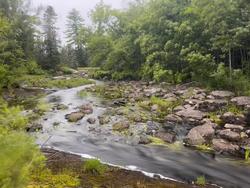
Day 11 of 15
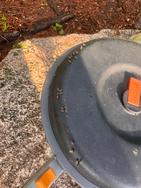
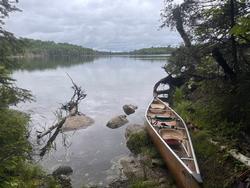
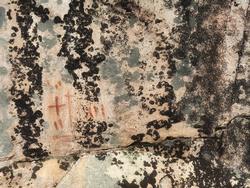
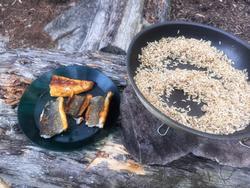
Saturday, June 21, 2025 It's raining when I wake up at 5:00, so I decide to fall back asleep and wait until it stops. I eventually get up at about 6:30 and start packing up. But first: coffee! I'm not feeling hungry for anything this morning, so I opt for a protein bar to get me to Oyster. I paddle across Gebe, lamenting my lack of catching any walleyes—it will have to wait until next year. The portage into Green is only 124 rods, but the first portion is a steady uphill ascent. Reaching Green, I notice the water levels are way up from the last time I went through. Beavers have dammed the creek that flows into Gebe, raising the lake by a few feet. Dozens of white pines that line the shoreline are now dead from the rising water. Green has more beautiful old-growth white pine along the eastern shoreline—another group of trees that must have escaped the logging that took place before the Boundary Waters was formed. The portage into Rocky is only 68 rods. Again, it's a short uphill climb before the portage levels off. Rocky Lake lives up to its name, as the end of the portage is littered with large boulders, making it slightly challenging to put in my canoe. Because I carry two large packs, I'm forced to "double-portage." While this takes more time, it allows me to see the forest—something you miss when your head is stuck under a canoe. I take my time on Rocky and visit the pictographs. The meaning of these pictographs remains a mystery. As I approach them, I get an uneasy feeling, as if something tragic had happened here. These pictographs intrigue me because they are somewhat hidden. Most people pass straight through this lake and would never know that they are there. I take my last short portage into Oyster Lake. From the end of the portage, I can see the campsite where I want to stay. I notice a tarp up, but I'm hoping they are still planning on leaving. I return to get my gear bag, and by the time I return, it looks like the group has left. Sure enough, as I approach the site, it is vacant. This will be my home for the next four nights. I decide to have a late breakfast at my new site. It's a combination of my dehydrated scrambled eggs and instant steel-cut oats. I set up my tent in a grove of cedars out of the sun. I prefer a two-person tent to a one-person tent. A one-person tent seems to be a little claustrophobic. I like the extra room, and it doesn't really add that much extra weight. After I set up my tarp, I get ready to fish for the rest of the afternoon. The day continues to warm, and I spend the entire afternoon fishing and sweating. I try jigging with no success and return to trolling. I get not one, not two, not three, but four strikes—but no fish. I manage to catch a 24-inch laker, which is too big for me to eat. I'm beginning to resign myself to a freeze-dried meal this evening when I hook into another laker. This one is about 18 inches—perfect for eating. I fry it up along with some stir-fry rice. After cleaning up dinner, I'm sweating profusely and ready to jump in the lake. Unfortunately, the last group that stayed on this site threw fish guts right off the campsite. The odor is almost unbearable. Still, I jump in to cool off. 
Day 12 of 15
Sunday, June 22, 2025 I planned on getting up early, but I'm too tired. Sometimes my ambition is stronger than my body. Plus, during the early morning, the wind picked up, and now I'm not sure if I'll be able to fish today. One of the main reasons for doing a solo trip is to "clear the mind" and enjoy the present. This trip is a mental struggle, as I'm haunted by the loss of my sister and the weight of being the only one to take care of my parents. Will I be able to do it? Will I be able to navigate the minutiae of taking care of my parents? What will happen when one of my parents dies? My mother says she doesn't want to go to a home, but what will she do if my father passes away first? What will happen to the farm? What will happen to all of their possessions? Being the third child out of four, I've gotten used to having my older siblings help lead the way. The wind has definitely picked up, with some strong gusts. Fishing has become nearly impossible and certainly not enjoyable. I can paddle in this, but fishing is another story. If I catch a fish, I have to put my paddle down, and then I start being blown across the lake. It's very difficult to land a fish solo. I decide I'll do a little exploring. I make my way up the peninsula and paddle along the shoreline until I get to the entrance of Manes Nord Creek and paddle up the creek. The forecast for the remainder of the day is calling for the potential of damaging storms. When it's too windy, you stay off the water. During thunderstorms, you are at the mercy of nature. I've had a few solo trips when thunderstorms have rolled in during the night. One night on Ramshead Lake, my tent sat under two large White Pines. Lightning was hitting the ground, and the wind was gusting severely. I decided I needed to get out and find another spot to hunker down until the storm passed. Thankfully, no trees fell, and no lightning struck any trees close to camp. By four, I'm ready to head back to camp. The wind has appeared to calm down, so I quickly get my purple Tail Dancer in the water. Right away, I get a strike, and five minutes later I've got a small laker. I head to shore to fry him up. After eating, I decide to troll my way back to camp. Just as I get to a deep section of the lake, the wind picks up again, along with the gusts and whitecaps. I decide that's enough and head right back to camp. It's been another hot day, so I decide to make a quick meal of Pad Thai and then cool off in the lake. Some trips I'm ready to leave when my exit day comes, and other trips, I've felt I could stay out for several more days, provided I have enough food. I've been on plenty of solo trips, and there have been times I'm ready to exit after only a few days. The start of this trip was no exception. I do solo trips to push myself mentally and physically. When I've pushed my body, it's easy to recognize and simply rest. When loneliness or other thoughts of worry enter my mind, it's nearly impossible to turn them off. The best thing to do is to stay busy—but eventually I have nowhere to go but to confront my negative thoughts. I spend the rest of the evening at camp, as it is still windy and very hot. Even with the heat, I get a fire going and watch the sun go down among the gathering storm clouds. At nearly 10:00 p.m., the mosquitoes have finally come out, and I make my way to the tent. During the night, I am awakened by the sound of thunder. The thunder is so loud that the ground is shaking. It barely rains for 20 minutes, but the lightning and thunder continue for another hour before I fall back to sleep. 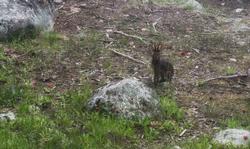
Day 13 of 15
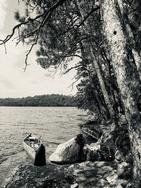
Monday, June 23, 2025 The morning is overcast, with a little mist falling. It's another windy day, and it is noon before I am able to get on the water. I fight the gusts and the wind, and I realize that I need to get off the water. When you're trout fishing, the wind is your enemy. Getting to deep water usually means being exposed out in the middle of the lake. It's a price you pay for catching lake trout. Being windbound in the Boundary Waters is fairly common, especially on the larger lakes. There's a temptation to push through or to ignore the signs of potential danger because you feel you need to maintain a schedule. Stay put and stay safe. It can be frustrating, but I'd rather be dry and at my campsite than capsized and struggling to retrieve packs and get to shore. 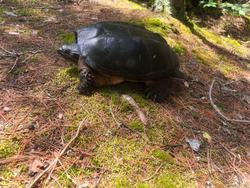
Day 14 of 15
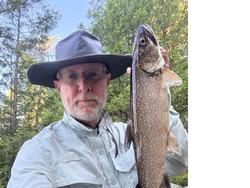
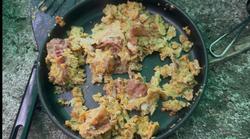
Tuesday, June 24, 2025 I wake early on my penultimate day. The morning is cool and chilly, with a slight breeze, and I grab my jacket as I exit the tent. I get my stove going and start boiling my water. My goal for the day is lake trout tacos for breakfast. I paddle around for three hours without a fish or a bite. I decide to head back to camp for breakfast. I eat my dehydrated eggs with my instant steel-cut oats, along with another cup of coffee. Even though I haven't caught a fish, the morning is nearly perfect: slight breeze, cool morning, birds singing, and a cloudless sky. My trout taco breakfast will have to turn into lunch—I hope! I catch a small laker and I'm hesitant to release it, but it's too small, so back to the depths. Forty-five minutes later, I'm ready to have a troutless lunch, but as I'm paddling to where I'm having lunch, my rod begins to bend, and I'm on another laker. Reeling in a laker, no matter what the size, is always stressful. Lots of times they feel like dead weight until they are 10–20 feet from the surface—then the true fight is on. This is where most people lose their fish. With my heart racing, I reel in, and with my rod in my right hand, I grab my net with my left hand and struggle to land the fish. This is where a partner comes in handy. It takes a few runs, but eventually I'm able to land a 17-inch lake trout—a perfect size for my lunch. I make it to shore and fillet the trout. Along with the trout, I have instant guacamole, brown rice with Mexican seasoning, and tortillas. I take my first bite, and I'm in heaven. I look out across Oyster Lake and think, "What a perfect day." My trip is complete! I head back on the water to do some more fishing, but I don't catch anything else for the remainder of the day. By 4:30, I take a break and doze off for a few minutes. As I float between consciousness and dreaming, random memories of my sister enter my thoughts. I never thought my older brother and older sister would be gone. I enjoy paddling in the evening after dinner and fish until sunset. This is a great time to see wildlife, especially deer, moose, and beavers, but tonight, my last night, I am content to sit by the fire. The sun has gone down below the tree line, and I can feel the evening starting to cool down. I can smell the earth, the trees, and the woods cooling down. Doing a solo trip means doing everything by yourself: paddling, portaging, eating, setting up, and taking down. But there is also a mental aspect to soloing. Can you spend time alone? Can you be at peace with your thoughts? I have had several trips where being alone almost caused me to leave early. That feeling can settle in your gut, and it's nearly impossible to shake it sometimes. 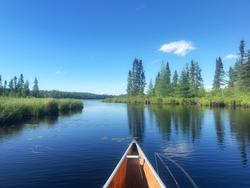
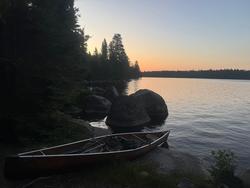
Day 15 of 15
Wednesday, June 25, 2025 I wake up at five—it's very chilly on my last day. I feel like I could keep going, but I know I must head out today. I lie in my tent for at least 15 minutes before I crawl out. Sigurd Olson always wrote about putting your watch away in order to get into the rhythms of the woods. And there was a time I used to do that. Waking up without an alarm, eating when hungry, and going to sleep when tired. All of these events are bound by time in my world. It's five: time to get up. It's noon: it's time to eat lunch. It's 10:00: it's time to go to bed. Today, though, it's nearly impossible not to know what time it is. Every device today has a clock. It's inescapable. I start my morning routine, getting my coffee going as I begin to take down my camp for the last time. While it's definitely cool, the mosquitoes seem not to mind. I start with my sleeping bag, then my tent, and because it doesn't look like rain, I fold up my tarp. The sun begins to rise above the tree line, providing me with some warmth and dispersing the mosquitoes. After having breakfast, I clean up my pots and finish packing the rest of my gear. It's time to go. I inspect my campsite for any trash or other items I may have forgotten and then carry my packs down to my canoe. The lake is calm, which will make for an easy paddle across Oyster. I troll my Purple Tail Dancer as I paddle to the portage. I have a strong desire to stay a few more days, which, to me, means I had a great trip. The portage out of Oyster Lake to Oyster River is one of the prettiest in the BWCA. Towering ancient red pines, white pines, and cedars surround the portage, and I take my time to enjoy being in their presence. The portage is only 70 rods, and once on the river, I encounter four beaver dams that I must cross before even reaching the portage. One option is to portage into Agnes and then head south to the Nina Moose River. The other way is to continue down the Oyster River. The Oyster River begins to narrow after the short 20-rod portage. No fewer than eight beaver dams greet me along the way. As I approach the Nina Moose River, the Oyster River narrows and meanders considerably. It's a tough paddle through the emerging vegetation until I finally reach the Nina Moose River. I pass several groups as I make my way up the river. Generally, this time of year, the current is negligible. I have two portages to cross before making it to Nina Moose Lake. I take a lunch break and continue on until I reach the final portage. As I carry my canoe and food pack up the 180-rod final portage, I notice the portage looks a little "grousy." I shall hunt this portage this fall. (Yes, I did—and I got one grouse!) By the time I've gone back for my gear bag and returned to my car, it is close to 2:00 p.m. I'm hot and exhausted and a little sad that my trip has come to an end. It will be my only overnight trip for the season. I will, though, be doing lots of day trips the rest of the summer and fall. Time to start planning for next year. 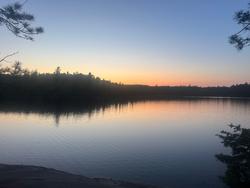
discuss this trip report (0 comments) - last post on September 04, 2026